
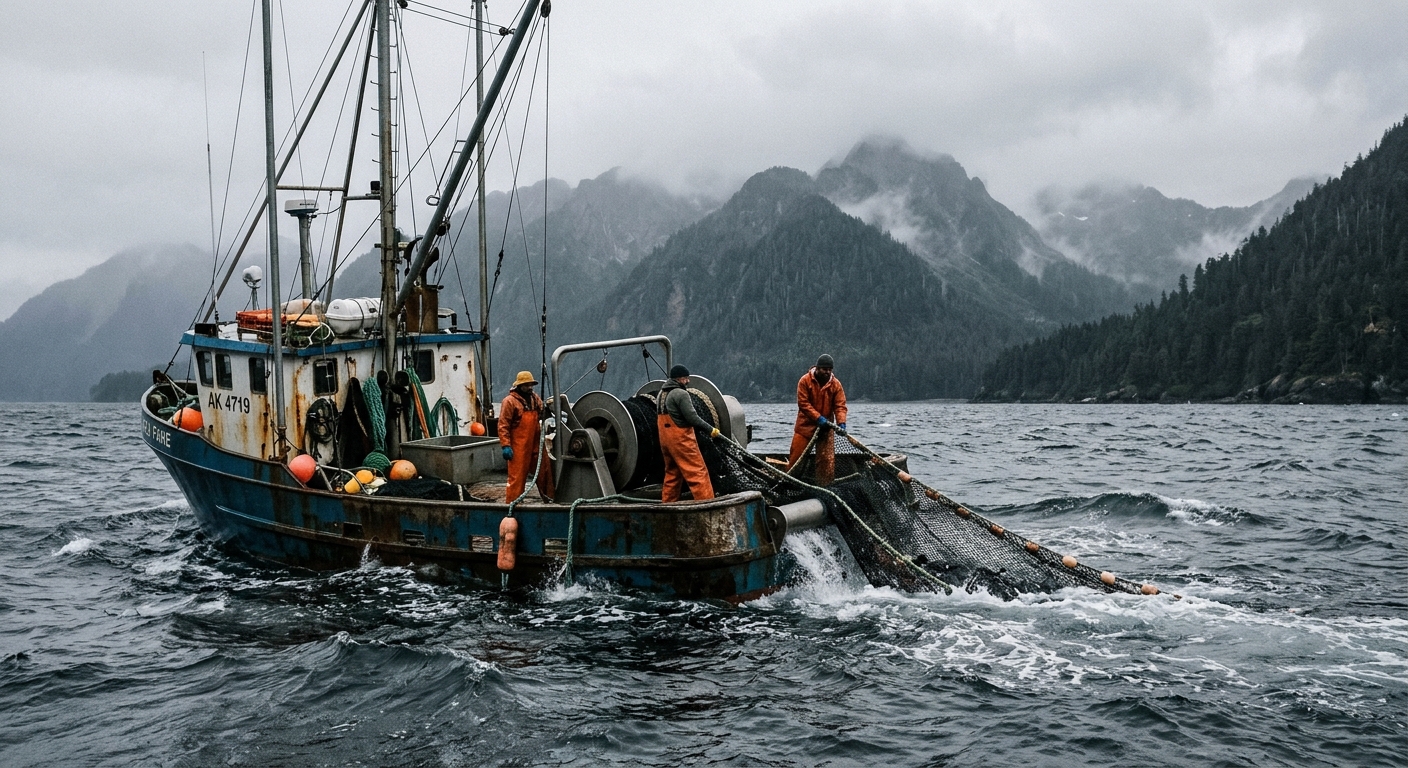
AI-generated illustration; not a photograph of the reported event.
- calendar_today November 9, 2026
Wild Fish Conservancy Raises Concerns Over Alaska Fisheries
The Washington-based nonprofit Wild Fish Conservancy has issued a formal notice of intent to sue the Alaska Department of Fish and Game (ADF&G), citing alleged violations of the Endangered Species Act. The focus of the claims involves the management of commercial salmon fisheries in key areas of Alaska, particularly with regard to the incidental catch of threatened or endangered king salmon.
Allegations Surrounding King Salmon Catches
The notice alleges that king salmon from rivers in the Pacific Northwest—some of which are protected under the Endangered Species Act—are being caught by both commercial and sport fisheries in the Alaska Peninsula and Chignik Management Areas (known administratively as Area M and Area L), as well as in the Kodiak Management Area. Wild Fish Conservancy executive director Emma Helverson referenced a genetic stock report released by ADF&G earlier this year, indicating many of the king salmon harvested in these fisheries originate from rivers outside Alaska.
Genetic Evidence Sparks New Concerns
"It was mostly assumed from 2012 through the present, that these were fish from Alaska," Helverson said. "So it’s not a small change. I mean, this is a total flip to find out that most of these fish actually originate from other places." The new evidence could have implications for how these fisheries are managed and the protection of threatened fish populations.
Legal Action and Federal Agencies Involved
The notice of intent also calls upon federal agencies, including the North Pacific Fishery Management Council, the National Marine Fisheries Service, and the U.S. Department of Commerce, to amend or develop new fishery management plans for the South Alaska Peninsula. The conservancy's claims allege that these agencies have failed to uphold federal laws, including the Magnuson-Stevens Act, the Endangered Species Act, and the National Environmental Policy Act. Under federal law, these agencies have 60 days to address the concerns before a lawsuit is filed.
Response from Alaska Department of Fish and Game
Dani Evenson, a policy advisor at ADF&G, stated the department is still reviewing the notice. "It is a lot to unpack, and it’s hard to say much at this point in time," Evenson said, adding that more information would be available if a lawsuit proceeds. She emphasized that "sustainable management of our natural resources is enshrined in the state constitution, and primacy, the ability to manage our fisheries, was [a] primary driver behind statehood."
Background of Previous Legal and Regulatory Efforts
The Wild Fish Conservancy has previously sought changes in Alaska fisheries management. In 2020, the organization unsuccessfully sued to shut down the Southeast Alaska king salmon troll fishery. More recently, it petitioned the federal government in 2024 to list Gulf of Alaska chinook salmon under the Endangered Species Act—a request the National Marine Fisheries Service found unwarranted earlier this year.
Next Steps
The federal agencies and Alaska Department of Fish and Game have up to 60 days to respond to the claims before Wild Fish Conservancy moves forward with legal action.
Related coverage
Source: ktoo.org.


