
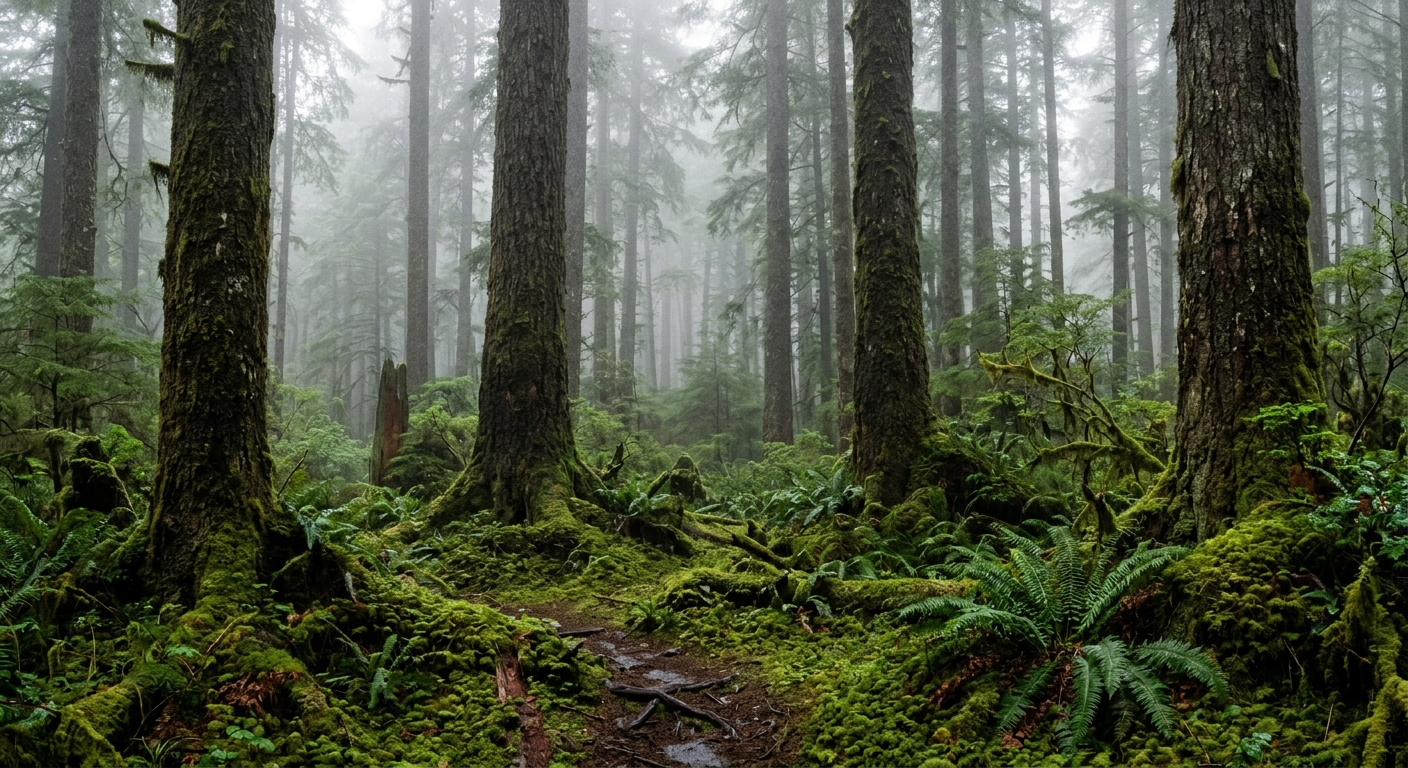
AI-generated illustration; not a photograph of the reported event.
- calendar_today November 6, 2026
The Roadless Rule and Its Future in the Tongass National Forest
For over two decades, the Roadless Rule has protected millions of acres within national forests from new roadbuilding and logging. Its future is under debate as the Trump Administration moves to lift the ban, focusing national and local attention on Alaska's Tongass National Forest, the largest in the country. Approximately half of the Tongass—spanning more than nine million acres—remains without active roads, and much of the land is further protected through additional designations.
Cultural and Ecological Stakes for Local Communities
Judith Dax̱ootsú Ramos, a Lingít anthropologist and a Southeast Alaska Conservation Council board member, expressed concerns about the ban’s removal. Walking through Douglas Island's roadless forest, Ramos noted how the land supports traditional foods, medicines, and art, which are foundational to the region's Alaska Native communities. She warned that "without this, we’re going to lose our traditional medicines, our traditional art styles, our traditional foods, and all that is really connected to the forest." Ramos also emphasized the area's significance as a carbon sink, holding a third of the carbon stored in intact U.S. national forests.
The Roadless Rule’s Contested History and Calls for Change
Since the U.S. Department of Agriculture established the rule in 2001, administrations have repeatedly rolled it back and reinstated it. Most recently, the department argued the rollback would improve access for wildfire management and reduce regulatory obstacles for activities like logging. However, in the Tongass, where wildfires rarely occur, some believe the move is intended to support the struggling timber industry—a sector that has experienced persistent decline since the 1990s.
Could Lifting the Ban Lead to a Logging Boom?
Tessa Axelson, executive director of the Alaska Forest Association, acknowledged that opening up currently roadless land would increase available timber supply. However, according to the U.S. Forest Service, only about 188,000 acres—less than two percent of the Tongass—could be considered suitable for logging under the present Forest Management Plan, if the road ban ends. Just four percent of the forest has already been logged, and many roadless areas enjoy added layers of protection, such as wilderness or recreation designations. Accessing timber is not just a regulatory issue; high costs for roadbuilding, transportation, and tariffs further limit economic viability.
The region's two largest timber companies, Viking Lumber and Alcan Timber, alongside the industry group, have attempted to force greater timber access through legal action, but a federal judge dismissed their lawsuit, and the case is currently under appeal. The Forest Service says it is not legally required to fulfill industry demand, a stance supported by a Government Accountability Office report confirming the agency has missed timber sale targets for a decade.
Economic Challenges and Shifting Priorities
Economic barriers compound logging's challenges in Southeast Alaska. Road construction averages $200,000 per mile, much timber requires transportation by boat, and exports have fallen to historic lows following new tariffs. As Axelson explained, volatility at the federal level makes long-term planning difficult, and past removals of the Roadless Rule did not result in increased timber sales—only spending on unsold sale preparations. From 1999 to 2018, the Forest Service spent more than $600 million preparing timber sales, recouping just 5.4%.
Susan Alexander, a retired Forest Service economist, argued that the competitive advantage favored regions with easier access and lower transportation costs, like Canada or New Zealand. She noted, "It’s such a difficult-to-access place with high transportation costs and wood that’s going to compete in a global market. It just doesn’t really make a lot of sense." Some limited increases in logging may occur near existing roads and waterways if the ban is lifted long enough.
Tourism, Timber, and the Tongass’s Next Chapter
The Tongass is experiencing a broader economic shift as the Forest Service revises its management plan to reflect a regional pivot from timber to recreation and tourism. Timber jobs in Southeast Alaska have declined by 65% since 2005, now numbering fewer than 300, while the region’s tourism industry supports over 8,000 jobs. Logan Berner, a forest ecologist at the University of Alaska Southeast, emphasized that old, intact forests draw millions of visitors annually and questioned whether resource extraction should take precedence over other values. The U.S. Department of Agriculture is expected to finalize the rollback decision next year, leaving the Tongass at the center of debates about conservation, economy, and the role of public land.
Source: ktoo.org.


