
- calendar_today October 15, 2026
Alaska Placed Among Top Ten States for Tire Damage Risk
A recent nationwide study has ranked Alaska as the eighth highest state for tire damage risk in the U.S., citing particularly challenging road conditions. This placement puts Alaska among the most problematic states for drivers concerned about vehicle tire damage and road safety.
Study Details and Methodology
The study, conducted by Florida-based Priority Tire, analyzed 2024 Federal Highway Administration (FHWA) Highway Statistics data for all fifty states. It focused on National Highway System pavement categorized by three specific measures: severe rutting, severe roughness, and severe cracking. These factors were then used to calculate a campaign-specific tire damage risk score, ranging from zero to 100. The index weighted roughness at 40%, rutting at 35%, and cracking at 25% in the final calculations.
Alaska's Road Condition Scores
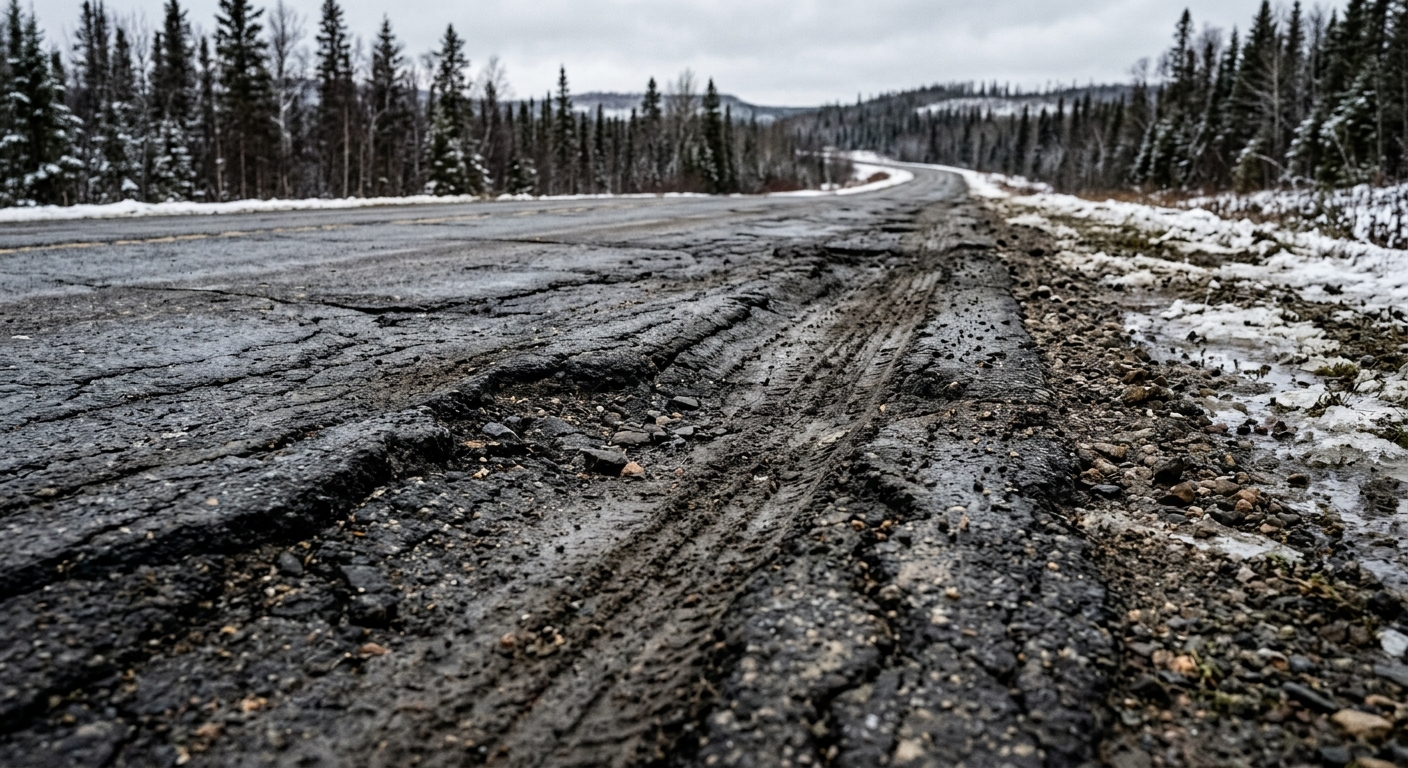
Based on this analysis, Alaska received an overall tire damage risk score of 20.61 out of 100. The state has over 650 miles of badly deteriorated highway, contributing to the high ranking. Alaska's highways are marked by 269 miles of severely rutted roads, positioning it fifth nationally for rutting severity—a major component making up nearly 80% of its damage risk score.
Alaska's roughness score was 2.72, ranking 21st, while its cracking score was 1.46, ranked 37th compared to other states. These rankings reflect the challenging nature of Alaska roads, with rutting severity being a key factor behind pavement damage and subsequent tire wear.
Comparative Rankings Nationwide
When compared to other states, Alaska's total risk score was 19.96 points higher than Delaware, which was recognized as having the best road conditions. Alaska's score was 0.16 points higher than ninth-ranked Alabama and 44.14 points lower than California, which was ranked as having the worst road conditions.
The report highlighted Alaska's unique environmental challenges, noting, "Across Alaska, the road threads through a vast and unforgiving landscape, crossing frozen ground that heaves and settles with the turn of every season. Season after season, deep frost, spring thaw, and heavy loads work the pavement loose, wearing ruts into the surface where wheels travel most."
Understanding the Tire Damage Risk Score
The tire damage risk score developed by Priority Tire is an analytical index combining the three pavement condition factors: rutting, roughness, and cracking. While this score uses federal highway data to rate pavement conditions, it is not an official FHWA metric and does not directly measure actual tire failures, flat tire rates, crash incidents, or overall vehicle safety. Instead, it provides insight into conditions that can impact tire lifespan and contribute to increased vehicle maintenance costs due to road quality.
Alaska's Road Challenges in Context
Alaska's high ranking for pavement deterioration and tire damage risk reflects the effects of its weather and environment. The presence of over 650 miles of deteriorated highway demonstrates ongoing challenges facing both transportation officials and drivers navigating the state's road network. While factors like rutting severity lead the way in damage scoring, Alaska's unique geographic and climate patterns are clearly outlined as contributing factors to ongoing pavement damage and highway deterioration.
Source: juneauempire.com.


