
- calendar_today October 15, 2026
Ex-Typhoon Halong: A Year of Recovery
One year after ex-typhoon Halong struck Western Alaska, communities across the Yukon-Kuskokwim (Y-K) Delta are still working to repair storm damage and adapt to an uncertain future. The storm forced more than 1,500 people from their homes, prompting extensive evacuations and emergency responses that have highlighted both progress and ongoing challenges in disaster preparedness.
Community Impact and Ongoing Displacement
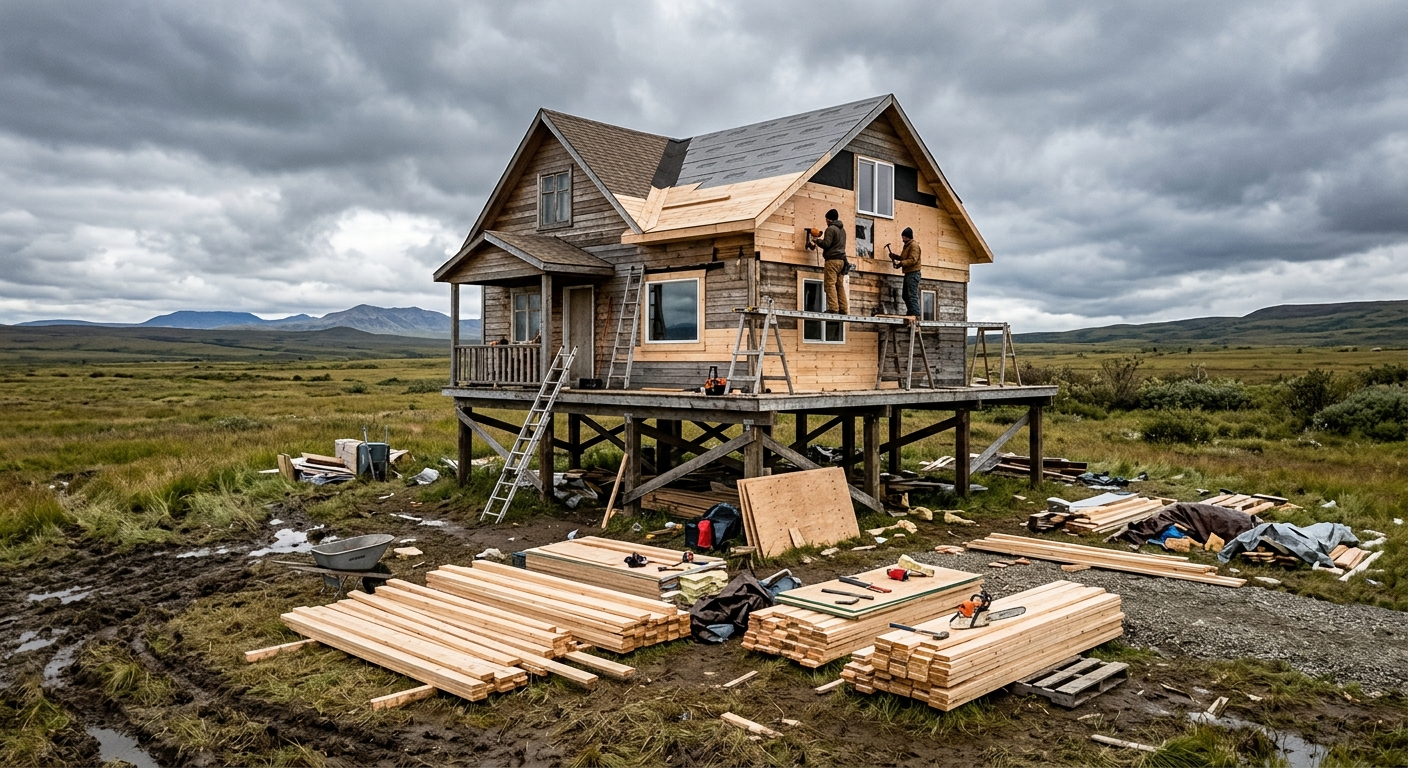
When the remnants of Typhoon Halong hit, dozens of Y-K Delta communities were abruptly disrupted. Hardest-hit villages like Kipnuk and Kwigillingok saw the majority of their residents evacuate—over 974 people in Kipnuk alone at the time, according to tribal counts. More than 280 evacuees from both villages have since relocated to Bethel, with many still unable to return home. In Kipnuk, 90% of buildings were damaged or destroyed, and local crews are working to restore livability, with repairs to about 150 homes expected by Thanksgiving. Kwigillingok, where more than 40 homes were lost, has seen repair efforts pause as residents and leaders address critical infrastructure like water lines and boardwalks.
Evacuation and Emergency Response
The aftermath of ex-typhoon Halong saw one of the largest airlift evacuations in Alaska’s history. Volunteers, agency officials, and donations converged on Bethel, turning the city into a temporary hub of relief. Many displaced residents moved on to Anchorage, and Bethel continues to grapple with increased demand for housing—a challenge underscored by the 15 families still hosting evacuees a year later. The crisis has brought renewed attention to the need for improved disaster response and housing solutions.
Relocation and Long-Term Planning
Both Kipnuk and Kwigillingok are exploring relocation after the severe impacts of Halong. Tribal votes and planning are underway to move to higher ground, but significant obstacles remain, including barge access, land ownership, and construction of new schools. While Kipnuk’s tribe prioritizes immediate rebuilding, leaders emphasize the need for long-term solutions. The state has requested federal support through FEMA disaster assistance to replace damaged homes, but funding for permanent housing has been denied so far. An estimated 675 homes across the region still need repairs, and 189 households face the upcoming expiration of temporary rental relief in April 2027.
Subsistence and Cultural Losses
Beyond buildings and infrastructure, subsistence activities and traditions have suffered. Inundation from the storm reached over 15 miles inland in some areas, disrupting natural habitats and traditional harvests. In Nightmute, changes in fish patterns and vanished hunting areas underscore the storm's lasting impacts. Seasonal camps like Umkumiut have not been rebuilt, reflecting both reluctance and impracticality after the destruction. In the face of these challenges, individual assistance funds from FEMA have mostly gone toward replacing essential survival tools such as outboard motors and snowmachines.
Schools as Centers for Shelter and Recovery
Schools in many communities played a crucial role during the aftermath, serving as emergency shelters for approximately 1,300 people. While most school buildings remained intact, some locations, including Kipnuk and Kwigillingok, are still closed to regular classes, with students enrolled in other schools or attending online. The Lower Kuskokwim School District has increased their emergency preparedness to better respond in future storms.
Climate Preparedness and Regional Response
Recent years have brought multiple powerful storms to Western Alaska. Ex-typhoons Halong and Merbok, in addition to long-standing Bering Sea storms, emphasize the area’s vulnerability. Efforts to develop a tribally led, region-wide emergency response system are underway, with calls for sustainable federal funding and coordination. Communities like Quinhagak are strengthening local search and rescue operations and harnessing technology—including drones and mapping—to bolster readiness against future western alaska storms. However, gaps remain in weather forecasting and data collection, further complicating climate preparedness.
Looking Ahead
As land and communities continue to change in response to storm events, leaders and residents are focused on resilience—preserving cultural ties, improving emergency planning, and pushing for resources to prevent environmental displacement. With lived experience as their guide, communities across the Yukon-Kuskokwim Delta are working to ensure they are better prepared for what comes next.
Source: ktoo.org.


