
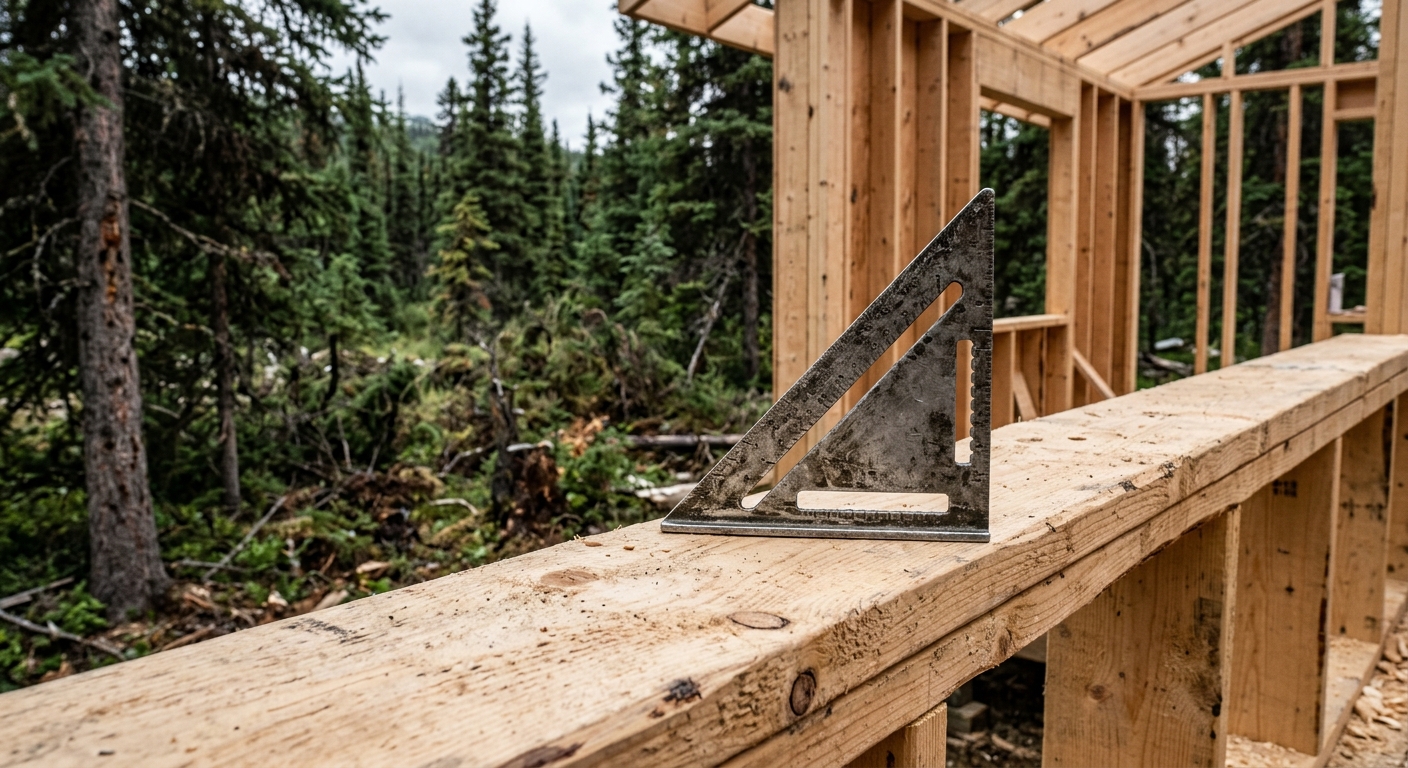
AI-generated illustration; not a photograph of the reported event.
- calendar_today July 11, 2026
In Alaska, cabin building is more than a summer project—it’s a merging of skilled craftsmanship, familial bonds, and the interplay of tradition and technology. This season, one local builder’s journey embodied all three facets, shedding light on the everyday realities and deeper lessons woven into building a remote cabin from the ground up.
Challenges of Cabin Building in Remote Alaska
For many in Alaska, the dream of constructing a remote cabin combines self-reliance with the beauty of the wilderness. This summer, a challenging miscalculation in setting anchor bolts threatened one such project. The alignment was off, jeopardizing the cabin’s structural integrity. Despite initial attempts at creative fixes, the severity of these building errors became clear. The solution involved cutting and resetting the anchor bolts—a task tackled with the aid of online video tutorials, even though internet service at the site was practically non-existent.
Adapting with Modern Construction Tools
Resourcefulness is central to successful cabin building, especially in remote regions like Alaska. Makers and builders rely on classic construction tools as well as contemporary solutions to solve on-site problems. A speed square, for example, proved invaluable for layout and measurement, outperforming complex gadgets with its simplicity and reliability. This piece of equipment remains a staple for both novice and experienced builders, offering precise results no app can replace.
The Role of Digital Learning and the ‘Google Effect’
Modern issues sometimes require digital solutions, and this was evident in the cabin’s construction process. When faced with the anchor bolt mistake, the builder turned to digital learning, seeking expert-led tutorials and advice found online. Many in Alaska’s isolated communities have grown increasingly accustomed to this approach, though it comes with caveats. The ‘google effect,’ where instant access to online information decreases long-term retention, often influences how people learn today. However, as demonstrated in this instance, the act of researching, applying, and physically solving problems enhances retention and practical knowledge more effectively than passive internet browsing.
Passing Down Practical Knowledge and Tools
While technology provides valuable resources, Alaskan builders understand the lasting value of hands on craftsmanship and tactile learning. The symbolic gesture of gifting a speed square to the next generation represents more than passing along a tool—it is a transfer of tradition, skill, and the appreciation of old-school methods. This commitment to practical knowledge, combined with an ability to adapt when facing challenges, is central to remote cabin construction and family legacy alike.
Balancing Family Time and Building Projects
Time spent cabin building in Alaska often intersects with family time, creating opportunities for shared accomplishment and learning. This approach fosters an enduring sense of pride and connection that goes beyond the structure itself. Engaging children in construction activities introduces them to foundational skills and values, setting the stage for an appreciation of both new technologies and hands-on craftsmanship. The result is a project that, while rooted in hard physical work, also reinforces family bonds and creates lasting memories.
Looking Forward: Tradition Meets Innovation
The experience of fixing building errors and overcoming obstacles on a remote cabin project reflects the evolving nature of construction in Alaska. As local builders continue to blend digital learning with established construction tools, they reinforce a uniquely Alaskan combination of resilience, ingenuity, and community. Whether through family involvement, creative problem-solving, or reverence for traditional methods, cabin building remains a touchstone for practical wisdom and regional pride.


