
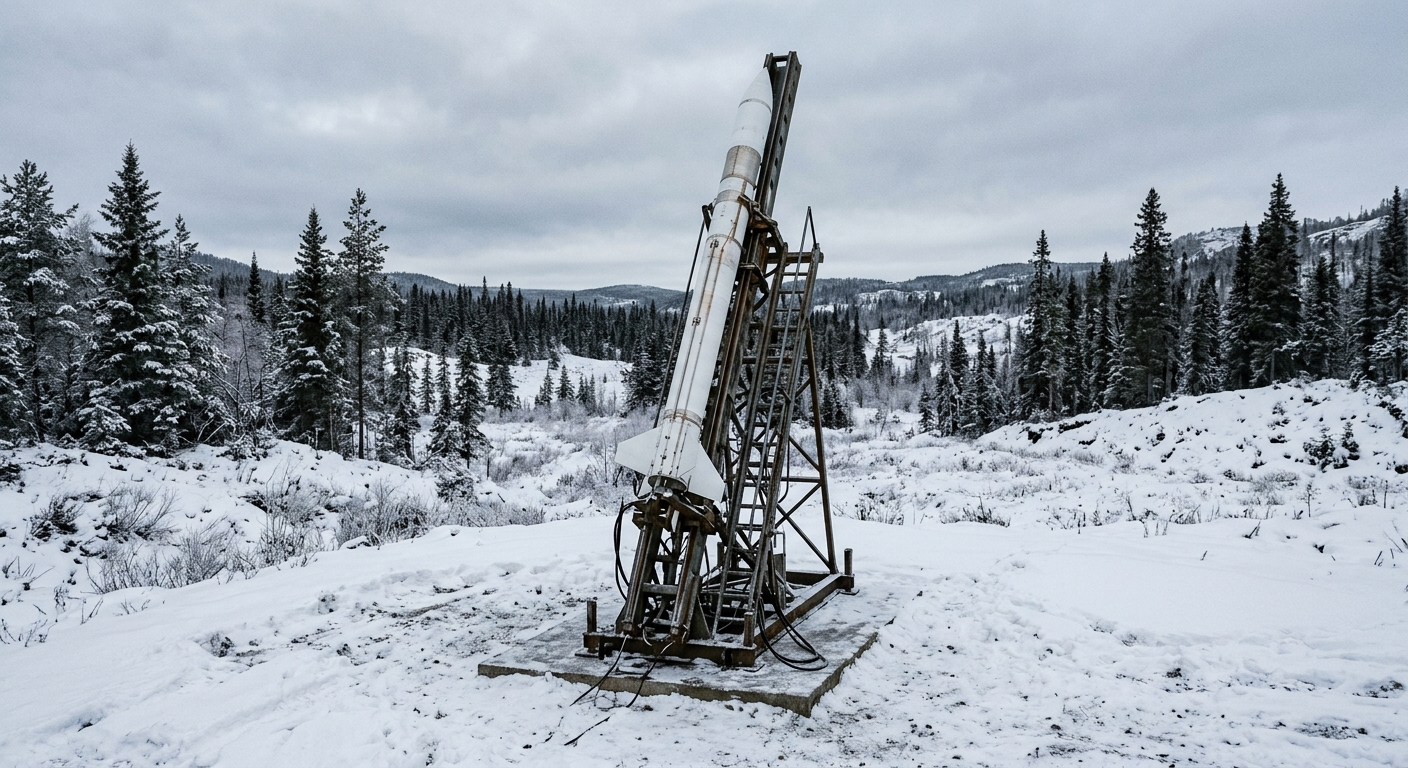
AI-generated illustration; not a photograph of the reported event.
- calendar_today October 26, 2026
Research Rockets Lift Off from Poker Flat
Two research rockets soared into the sky from the Poker Flat Research Range, located just north of Fairbanks, in October 2026. Designed to study the complex processes surrounding dying stars and cosmic dust, these launches mark significant advancements in space science.
INFUSE-2 Mission Explores Star Death and Nebula Formation
The first rocket launch was part of the INFUSE-2 mission, led by a team from the University of Colorado Boulder. The mission’s principal investigator, Brian Fleming, explained that their key focus was to study how dying stars distribute material across the galaxy—a process essential for the formation of new stars and planets. The rocket carried the first spectrograph capable of processing far-ultraviolet light, enabling the team to observe much larger areas of nebulae than ever before.
"Our science was to observe Messier 27 — or the Dumbbell Nebula — to look at what happens when stars die," said Fleming. This nebula study utilises the spectrograph to unravel how massive stars end their lives with explosive events that blow gas and materials throughout the galaxy. Everything in our galaxy is believed to be brought to us by stars through such dramatic cycles of death and rebirth.
DUST-III Rocket Probes the Mysteries of Space Dust
Earlier in the same week, NASA’s DUST-III rocket braved heavy snow clouds to launch a separate experiment also from the Poker Flat Research Range. Led by Joe Nuth, the DUST-III project focused on the tinier components that make up our universe: space dust and cosmic dust.
According to Nuth, as stars run out of hydrogen fuel, they begin shedding their outer shells—elements such as silicon, magnesium, and iron. These elements transition from vapor to solid state in space, and DUST-III aims to clarify how minuscule dust grains condense and grow in a microgravity environment. To perform the experiment, the team launched a miniature laboratory inside the rocket, heating silicate dust filament to about 2,000 degrees Celsius to produce gas.
By conducting the experiment within microgravity, scientists assess whether the resulting dust forms larger aggregates or remains as loose clusters akin to “dust bunnies.” If the dust grains grow efficiently, even a particle only a tenth of a micron in size is considered sizable by astrophysical standards. Inefficient growth means the dust stays in very fine, loose forms.
Microgravity Research and Broader Implications
The microgravity research has applications beyond astronomy. Nuth noted that the findings could improve scientific understanding of dust produced by volcanic eruptions and coal-fired power plants, both of which exist in Alaska. This wider relevance may inform future environmental and energy research, though the primary focus remains on cosmic dust and star afterlives.
Success for INFUSE-2 and DUST-III at Poker Flat
Both missions at Poker Flat—the INFUSE-2 nebula study and the DUST-III dusty lab project—were declared successful by their respective leaders. Most of the rockets’ valuable components were recovered after launch, ensuring that the costly technology could potentially be reused for future research.
These rocket launches mark another milestone for poker flat as a center for space science, contributing valuable insights into the cycle of star death and nebula formation, as well as the behavior of cosmic dust.
Source: ktoo.org.


