
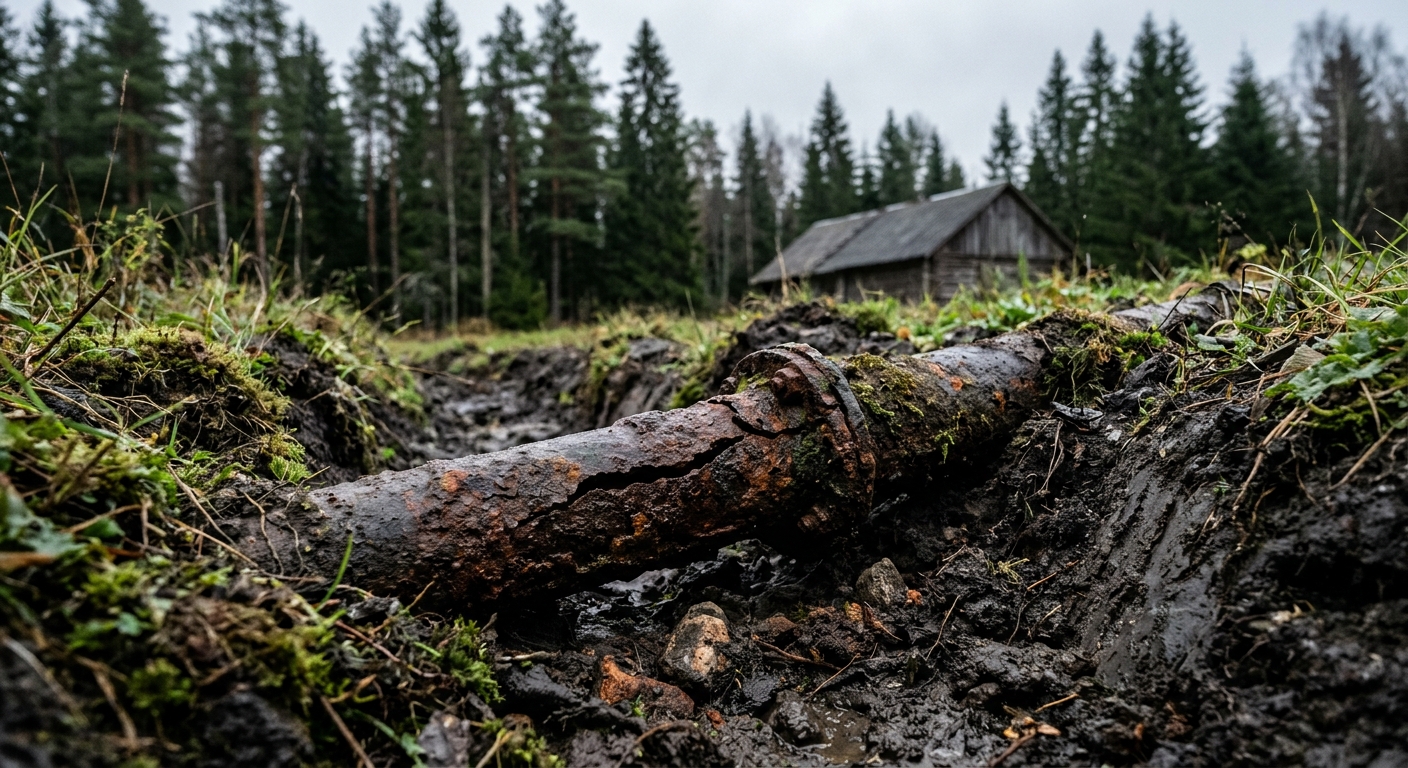
AI-generated illustration; not a photograph of the reported event.
- calendar_today November 23, 2026
Water Systems Under Pressure in Southeast Alaska
Communities across southern Southeast Alaska are grappling with repeated breakdowns in their water distribution infrastructure. In villages and small towns such as Hydaburg, Saxman, Craig, and Wrangell, decades-old water lines are increasingly failing, leading to water shortages, business disruptions, and urgent needs for upgrades.
Daily Life Disrupted by Water Shortages
In Hydaburg, located on the southern end of Prince of Wales Island and home to about 400 residents, water line failures this summer left many households relying on rainwater collected in tubs, buckets, and cooking pots. Jennifer Mooney, owner of Haida Botanicals, was among those affected. Unable to access running water, she suspended production of jams and teas using local berries and plants. Hydaburg’s only medical clinic was also forced to temporarily close its doors during the crisis.
The disruption began when two separate water lines—likely 40 to 50 years old—broke, cutting off water to the village. Last winter, similar problems emerged as freeze-ups left residents without running water for several days.
Linked Failures Across the Region
The situation in Hydaburg is not isolated. Towns across southern Southeast Alaska are facing similar challenges. Wrangell, situated roughly 90 miles away, experienced three water line failures in a single day in August. In another incident several months earlier, a bursting water main sent mud and water flooding into a downtown gift shop, damaging and destroying merchandise. Kimberly Szczatko, owner of Cooper's Corner gift shop, reported significant inventory loss, including items like Lego, Play-Doh, and yarn.
Water lines installed in the 1970s and 1980s make up much of the infrastructure in these areas. According to the American Society of Civil Engineers, ductile iron pipes can expect a service life of over 100 years, but in Southeast Alaska, failures are appearing much sooner. Public works officials, such as Wrangell's Public Works Director Tom Wetor, note that many lines fail after just 30 to 35 years, with some lasting only about 40 years. Differences in installation standards and challenging environmental conditions, such as acidic muskeg soils, are cited as contributing factors.
Mounting Need for Water System Upgrades
Communities are increasingly focused on the need for upgrades. Craig's public works director, Oliver Lewis, highlights ongoing efforts to redesign the town's most degraded water line, which runs beneath acidic muskeg from the holding dam to the treatment plant. While engineering work is underway, Craig still must secure funding before construction can begin—a process that could take years.
Pipes around Craig also froze last winter, introducing new leaks as they thawed and prompting two-week water conservation notices for residents. In Saxman, located just south of Ketchikan, a major water leak this year led the village to issue a notice to conserve water that lasted about three months. Saxman has now requested $10 million from the state for water line replacements, labeling the upgrades a top capital project priority.
Community Responses and the Ongoing Challenge
During the most severe outages, regional solidarity was evident as towns donated bottled water and tanks to Hydaburg residents. Organizations in Craig and Klawock, about an hour's drive away, offered shower facilities to those affected. Jennifer Mooney faced particular challenges with subsistence activities, including cleaning and processing salmon, relying on family to bring water from Craig.
While repairs have temporarily restored service in some areas, local officials and residents fear repeated breakdowns are likely without substantial investment. Hydaburg’s mayor, Anthony Christianson, reports some funding set aside for planning upgrades, but replacing water lines remains an uncertain future goal.
Looking Ahead
The struggle to maintain reliable water access in small towns and villages of southern Southeast Alaska underscores a broader national issue of aging infrastructure and the pressing need for resource investment.
Related coverage
Source: ktoo.org.


