
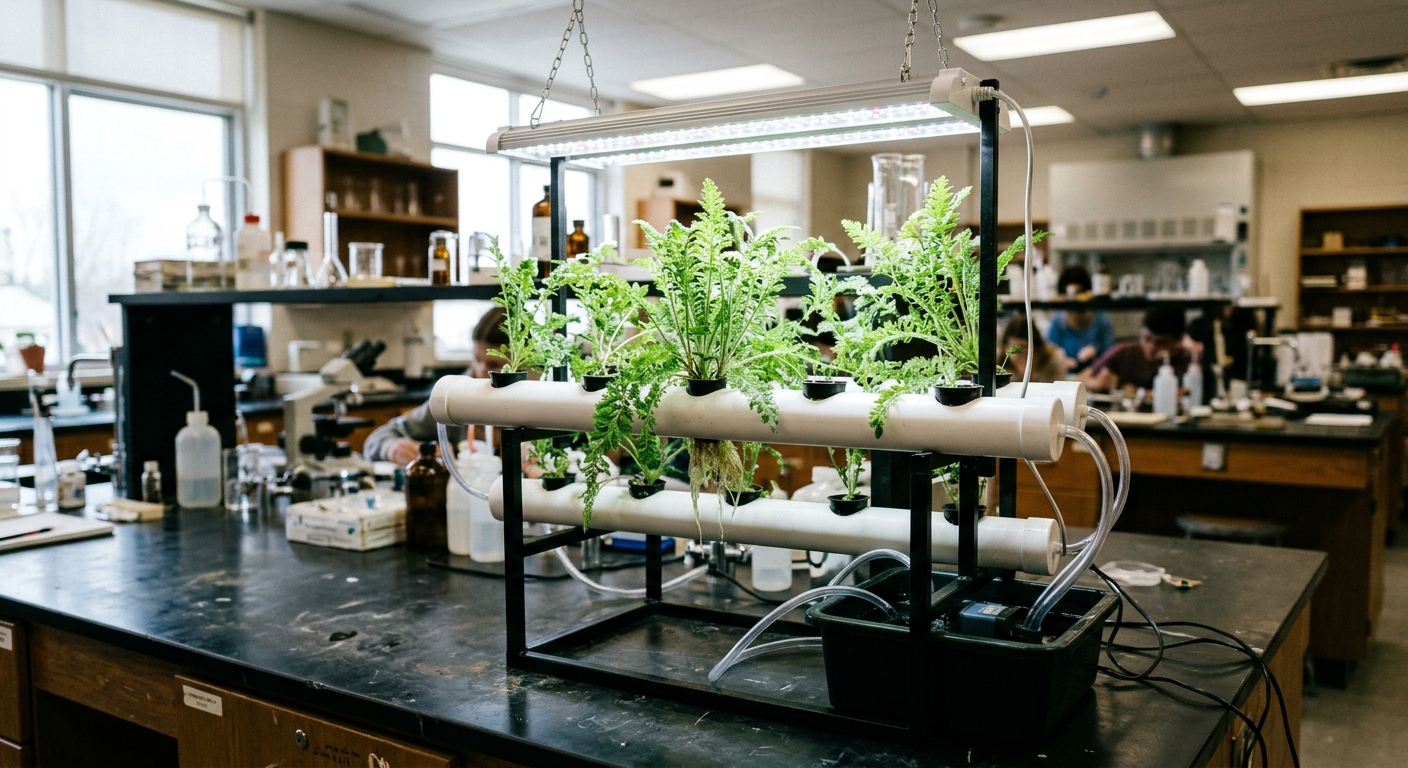
AI-generated illustration; not a photograph of the reported event.
- calendar_today November 24, 2026
Innovative Approach to Food Security in Southeast Alaska
Adeline Joseph, a Lingít senior at Juneau-Douglas High School: Yadaa.at Kalé, devoted her summer to exploring how hydroponics could help address food insecurity in Southeast Alaska. Joseph’s project focused on growing traditional plants hydroponically—a soil-free method of agriculture—within the challenging climate of the region.
Hands-On Research at Juneau Greens and in the Classroom
During a summer internship at Juneau Greens, a local hydroponic farm, Joseph began considering new ways to cultivate traditional medicinal plants. Concerned about the effects of climate change on these resources, she chose to focus her initial experiment on yarrow, a plant valued for its medicinal properties. She conducted her study inside a classroom at her high school, using hydroponic systems that bathed plant roots in nutrient-rich water and exposed them to LED lighting to mimic sunlight.
Personal Motivation and Community Impact
Joseph’s interest in hydroponic farming stemmed from firsthand experience. As a child visiting her family in Angoon, she observed the challenges rural communities face regarding food insecurity. This experience shaped her resolve to find practical solutions for ensuring food resources.
“It wasn’t just something you learned about in a class, but it was something that you lived, and it was our reality,” Joseph shared.
Collaboration with Angoon Students
Joseph is actively collaborating with students in Angoon, who have maintained a classroom hydroponic garden for five years. This partnership helps share knowledge, resources, and techniques that can benefit both Juneau and other rural communities in the region.
Hydroponic Experiment and LED Lighting Findings
Over six weeks, Joseph’s project investigated how varying the intensity and duration of LED lighting affected plant growth. Her findings showed that extending the lighting duration did not significantly impact plant growth compared to more intense lighting. “It doesn’t matter for how long it’s getting exposed to that lighting. It’s going to be about the same (as if) you were paying extra money to keep the lights on for maybe two hours longer,” Joseph explained. However, increasing the intensity of LED lights did lead to larger plant growth.
Recognition at the National Level
Joseph presented her findings at the Advancing Indigenous Science and Engineering Society (AISES) national conference in Portland, Oregon. Her project earned third place in the national science fair competition. During the event, she shared yarrow tea prepared from her hydroponically grown plants, highlighting the practical applications of her work.
Looking Ahead
Joseph’s innovative use of hydroponics, focus on traditional plants, and collaboration with other students showcase how hands-on research and Indigenous science can address food insecurity and adapt to changing climates in Southeast Alaska.
Source: ktoo.org.


