
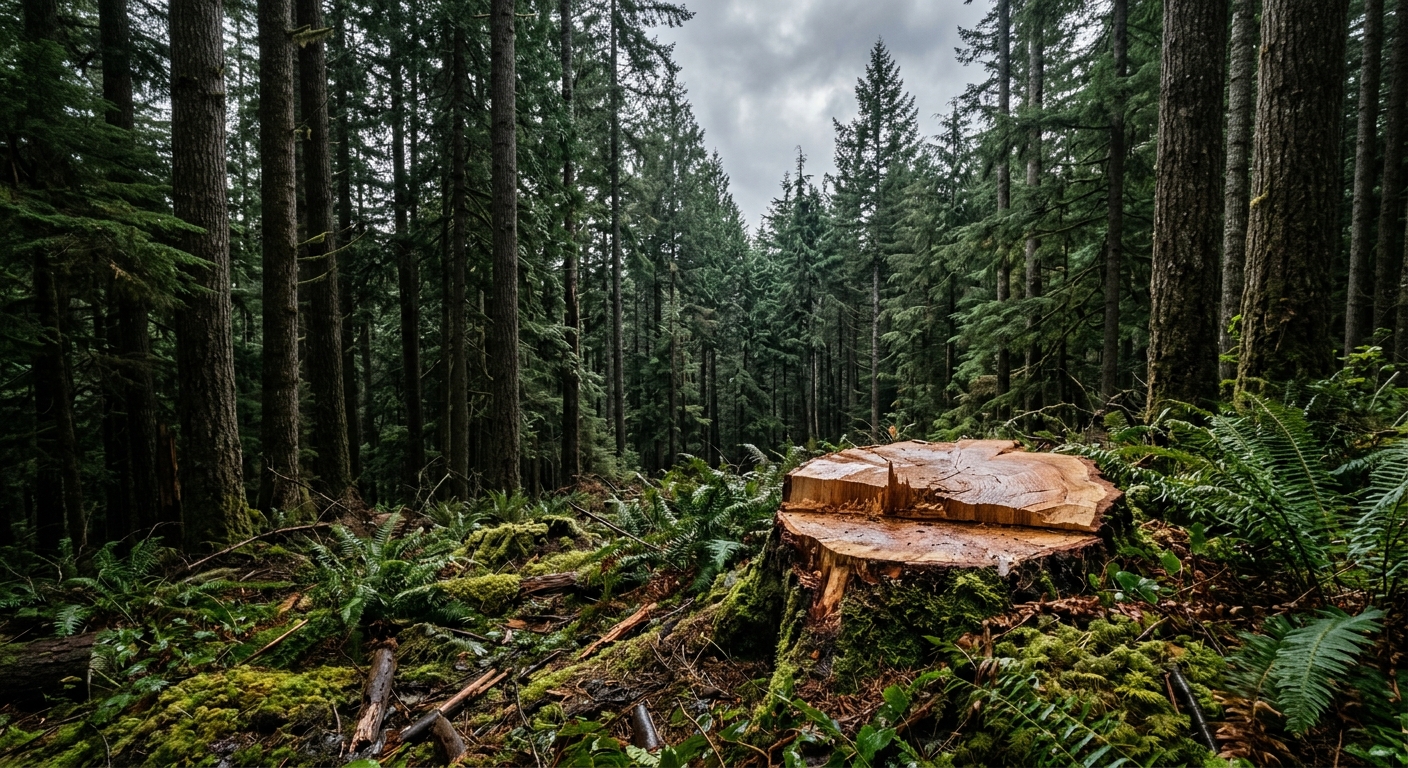
AI-generated illustration; not a photograph of the reported event.
- calendar_today November 10, 2026
Overview: Major Changes Loom for Haines State Forest Management
The Alaska Department of Natural Resources (DNR) is preparing to present a final plan for the Haines State Forest, following months of public input and agency review. The proposal would fundamentally change how the forest is managed, particularly by making the entire forest available for timber harvest for the first time.
Public Input Contested—Many Recommendations Unaddressed
Agency records reveal that most recommended changes from the public, including strong objections to broadening logging access, were not adopted in the final draft. "They pretty much said no to everything we suggested," said Mark Sogge, vice chair of the Upper Lynn Canal Fish and Game Advisory Committee. Many stakeholders, including recreation advocates and wildlife supporters, felt their voices were overlooked.
Background: New Direction Guided by State Statute and Administration
The current revisions began in 2023 under direction from the Dunleavy administration, with the original goal of enabling carbon credit projects. In 2024, the focus expanded to facilitating timber industry growth and conforming the management plan to the statute that created the forest. Geneva Preston, a forest planner with the DNR’s Division of Forestry and Fire Protection, explained the agency's interpretation: the statute encourages various uses, such as timber harvest, mining, recreation, and more, across the entire area. This approach departs from the previous plan, which reserved some sections for recreation and wildlife, excluding logging.
Key Details: Recreation and Habitat Areas Also Open to Logging
While areas identified for recreation or habitat will keep their designations under the proposed plan, these locations may also permit timber harvest if it aligns with their primary use and meets specific conditions—such as limits on clearcuts. For instance, Chilkoot Lake is mainly for recreation, but under the new plan, logging would be allowed as long as clearcuts remain below 20 acres.
Broad Public Opposition and Local Concerns
Despite a handful of comments supporting the possibility of increased logging for economic reasons, most submitted feedback called for restricting timber harvest. This opposition included recommendations from the Alaska Department of Fish and Game and the Chilkat Indian Village. Fish and Game advised prohibiting commercial logging in the Ferebee Valley, Kelsall River, and Chilkat Ridge due to risks to eagle and fish habitat from necessary bridge construction.
Chilkat Indian Village President Kimberley Strong advocated for designating Chilkat Ridge as wildlife habitat rather than forestry and highlighted concerns about clearcuts jeopardizing wildlife, traditional uses, and recreation. The tribe called for more robust consultation processes and stricter protection measures. Other voices, like Sogge's, argued that logging fundamentally conflicts with the goals of wildlife habitat and public use within the forest.
DNR Perspective and Limited Adjustments
Preston acknowledged community concerns but said the Dunleavy administration's mandate meant maintaining large-scale resource access. "The comments we received that said it should go back to the way it was in 2002. Like no, we didn’t make those changes," she stated. Some technical updates were made, such as including new sections on cultural resource sites, forest resilience amid climate change, and carbon offsets.
Carbon Credit Projects: Limited Applicability in Haines
The plan paves the way for developing carbon credit projects, though changes in global policy mean that only certain types will be viable in Alaska. DNR is working with Finite Carbon to pilot wildfire reforestation-based projects in the Interior, where fires are common. However, Haines and Southeast Alaska’s rare wildfires limit the approach's applicability in that region, as noted by Regional Forester Greg Palmieri.
Next Steps
The window for public comment closed on November 2. The final version of the Haines State Forest management plan will soon be submitted to the DNR commissioner for approval, potentially marking a major shift in how the area’s resources are managed in the future.
Source: ktoo.org.


