
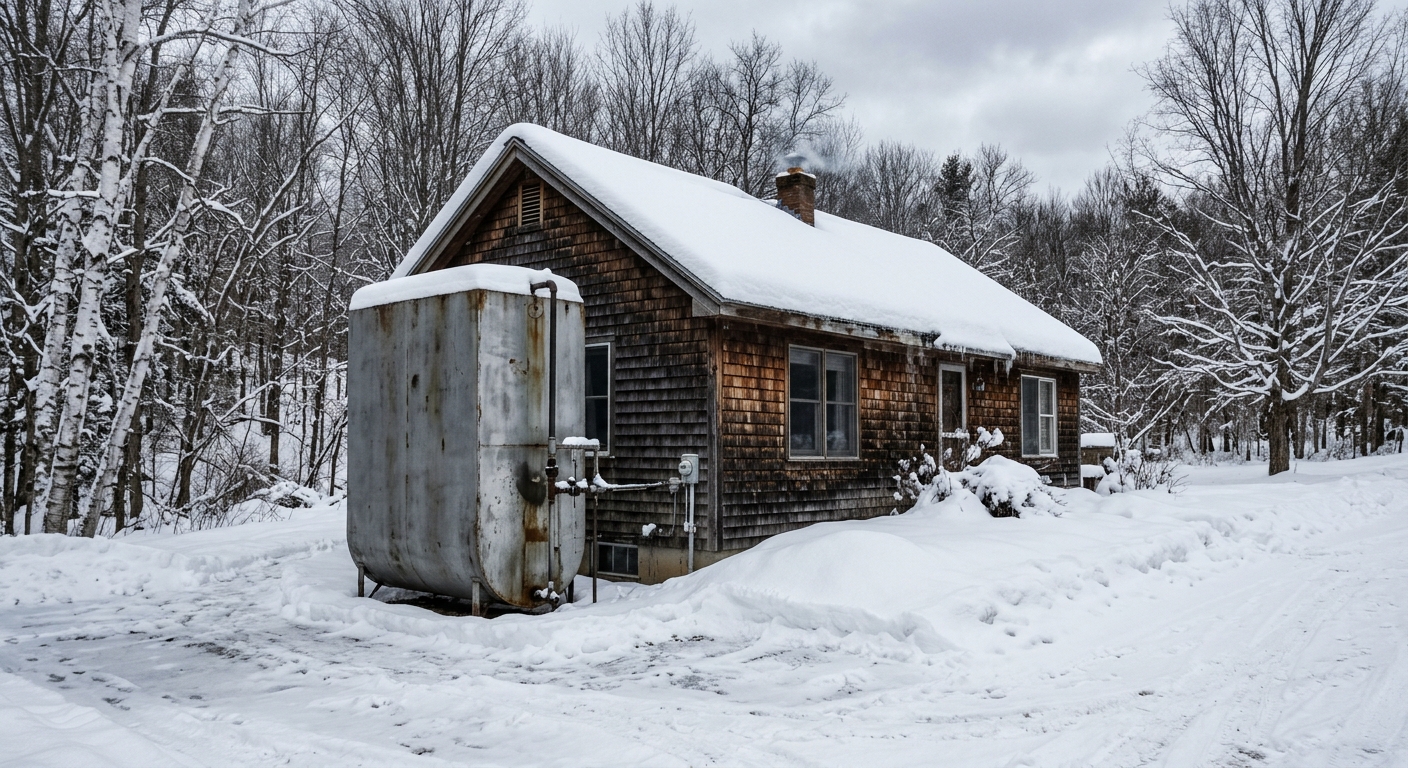
AI-generated illustration; not a photograph of the reported event.
- calendar_today November 6, 2026
Heating Oil Prices Surge as Winter Arrives in Interior Alaska
With freezing temperatures and snow already settled across Interior Alaska, residents are preparing for another costly winter heating season. The ongoing Iran war has sent oil prices soaring nationwide, causing particular concern for communities like Fairbanks that heavily depend on heating oil to keep homes warm.
Residents Face Difficult Choices as Costs Climb
Fairbanks resident Ray Turney was recently seen filling his heating oil tank at a local bulk plant, expressing frustration that prices are “too darn high.” For many Alaskans, there is little choice but to pay the elevated rates. Kate Marshall, a 67-year-old retired civil servant who lives in a cabin north of Fairbanks, says her fixed income stretches thin as both essentials and heating oil become more expensive. “It’s going to cost me a couple of grand to fill up my tank,” she explained. The rising costs are especially concerning for retirees and low-income families facing another winter of high expenses.
Global Events Driving Local Price Hikes
The recent conflict involving Iran has severely disrupted shipping through the Strait of Hormuz, a crucial conduit for global oil supplies. This disruption has helped push oil prices higher around the world. In Interior Alaska, these price increases translate directly to increased winter heating costs: many residents pay over $6 per gallon for heating oil, up from approximately $3.75 the previous year. According to 2019 state data, Fairbanks households use about 1,230 gallons of heating oil annually—nearly three times the average for Americans elsewhere. Alternatives like firewood and electricity remain costly, providing little relief for residents looking to switch heating sources.
Last Year’s Cold Weather Adds to Pressure
Alaskans are still feeling the impact of last winter’s record-setting cold. Weeks of subzero temperatures put many families over-budget for heating. Another harsh winter, combined with even higher fuel prices, presents a significant challenge. “I have to keep my furnace at a certain temperature when it’s really cold—you just dress warmer,” Marshall said, emphasizing the many sacrifices Interior residents are forced to make to manage their expenses.
Rural and Diesel-Dependent Communities Hit Hardest
Steve Colt, an economist with the Alaska Center for Energy and Power, warns that communities relying on diesel are especially exposed to price spikes. In rural Alaska, heating fuel costs are now at record highs—44% above the national average, according to the state’s most recent fuel surveys. The timing of fuel purchases can further complicate matters for residents who need to buy and store large quantities in advance of the winter season.
Energy Efficiency and Home Improvement Offer Relief
As costs mount, some Alaskans look for ways to make their homes more energy efficient. Dominique Pride, research director at the Alaska Center for Energy and Power, notes that even simple steps can help reduce heating bills: adding plastic to windows, and if possible, investing in an energy audit. One Fairbanks resident, Melania Stoeber, recently upgraded her home’s insulation by replacing old aluminum panels with modern foam panels, an investment of nearly $2,500. Stoeber described the memory of last winter and rising costs as a strong motivation for making improvements. “Oil prices are definitely on my mind—how could they not be?” she said.
Looking Ahead Despite Uncertainty
Despite the challenges, residents like Marshall and Stoeber intend to endure another Alaska winter, determined to make every drop of heating oil stretch further. Whether the Iran conflict resolves soon or continues, Interior Alaskans are bracing for uncertainty while seeking ways to cope with rising heating oil prices and persistent cold.
Related coverage
Source: ktoo.org.


