
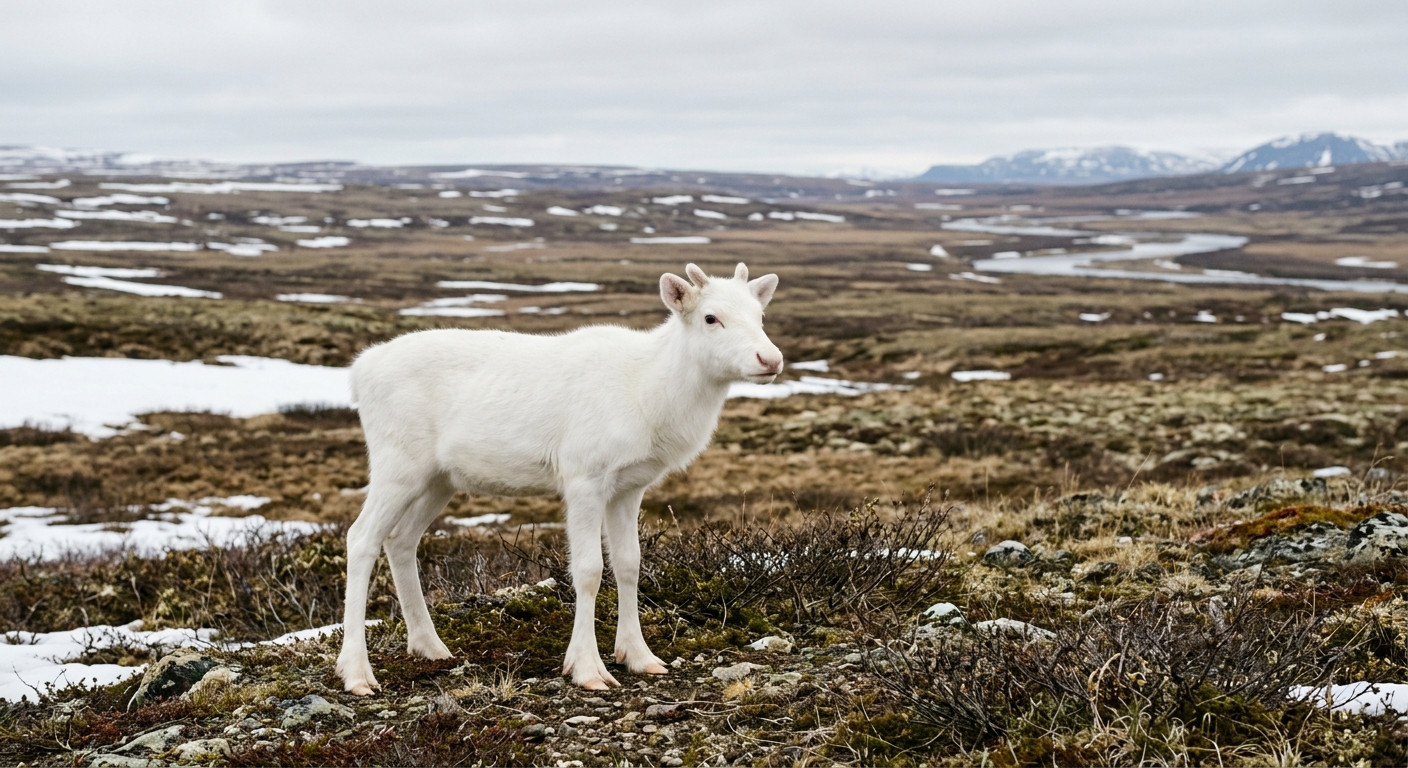
AI-generated illustration; not a photograph of the reported event.
- calendar_today October 11, 2026
Sighting of a Rare Albino Caribou Calf in Alaska
In late June 2026, Alaska Department of Fish and Game biologist Jordan Pruszenski captured striking photographs of a rare albino caribou calf on Alaska’s North Slope. The sighting took place during a routine survey flight north of Fairbanks, aimed at counting caribou calves to determine survival rates after their first month.
A Unique Discovery in the Tundra
While conducting the survey from a small plane, Pruszenski and the pilot noticed a bright white spot among the tundra’s patchy brown. As the calf stepped onto a snow patch, it blended in and nearly vanished from sight, an observation that caught Pruszenski by surprise. The biologist managed to photograph the calf several times, documenting its distinct white fur, pink hooves, and noticeable red eyes—classic signs of albinism in animals.
Rarity of Albino Caribou in Alaska
According to records from the Alaska Department of Fish and Game, this marks possibly the first photographed sighting of an albino caribou calf in Alaska. The last recorded observation dates back to 1976 when an albino calf from the Porcupine Herd was seen through a spotting scope. No photos were taken at that time, making Pruszenski’s images particularly significant for both wildlife observation and scientific documentation of arctic wildlife.
Challenges and Health Risks for Albino Animals
Veterinarian Camilla Lieske from Fish and Game highlighted the various health challenges faced by albino animals. Domesticated reindeer with albinism frequently suffer from health issues such as a shortened jaw, rounder head, immune deficiencies, and reduced survival rates. Without melanin, albino caribou lack natural protection against the sun’s ultraviolet rays, a concern in the Arctic’s 24-hour daylight periods. Albino animals are also more visible to predators, increasing their predator risk during the vulnerable stages of life.
Genetic Rarity and Ongoing Observations
Albinism in animals is a recessive trait, requiring both parents to carry the gene. Lieske noted that the occurrence might be more common than thought, as albino caribou calves potentially face increased predation and health challenges, leading to lower detection rates. In this particular case, neither the calf nor its mother were fitted with tracking collars, so the animal's ongoing status remains unknown. Pruszenski, however, expressed some optimism, noting that snowier conditions in the north could aid the calf’s camouflage and chances of survival.
Responsible Wildlife Observation Practices
The Fish and Game Department has withheld the name of the herd to prevent disruption and avoid drawing crowds to the area. This policy stems from prior experiences, such as the intense public interest in a white raven sighting in Anchorage in 2023, which resulted in stress for the animal. National Park Service data also show that caribou, particularly those from less-accessible herds, are prone to disturbance from low-flying aircraft—potentially harmful to caribou conservation efforts.
Pruszenski encouraged respectful wildlife observation: "If you happen to see it, it’d be great to let us know, but what we don’t really want is people to really be sort of trying to bother this caribou. We want to be able to give it its best shot, which will be to kind of just let it be a normal caribou." Plans are underway for biologists to document the discovery formally in a scientific journal, contributing to the broader understanding of albinism in wild caribou and ongoing caribou health research.
Source: ktoo.org.


