
- calendar_today September 1, 2025
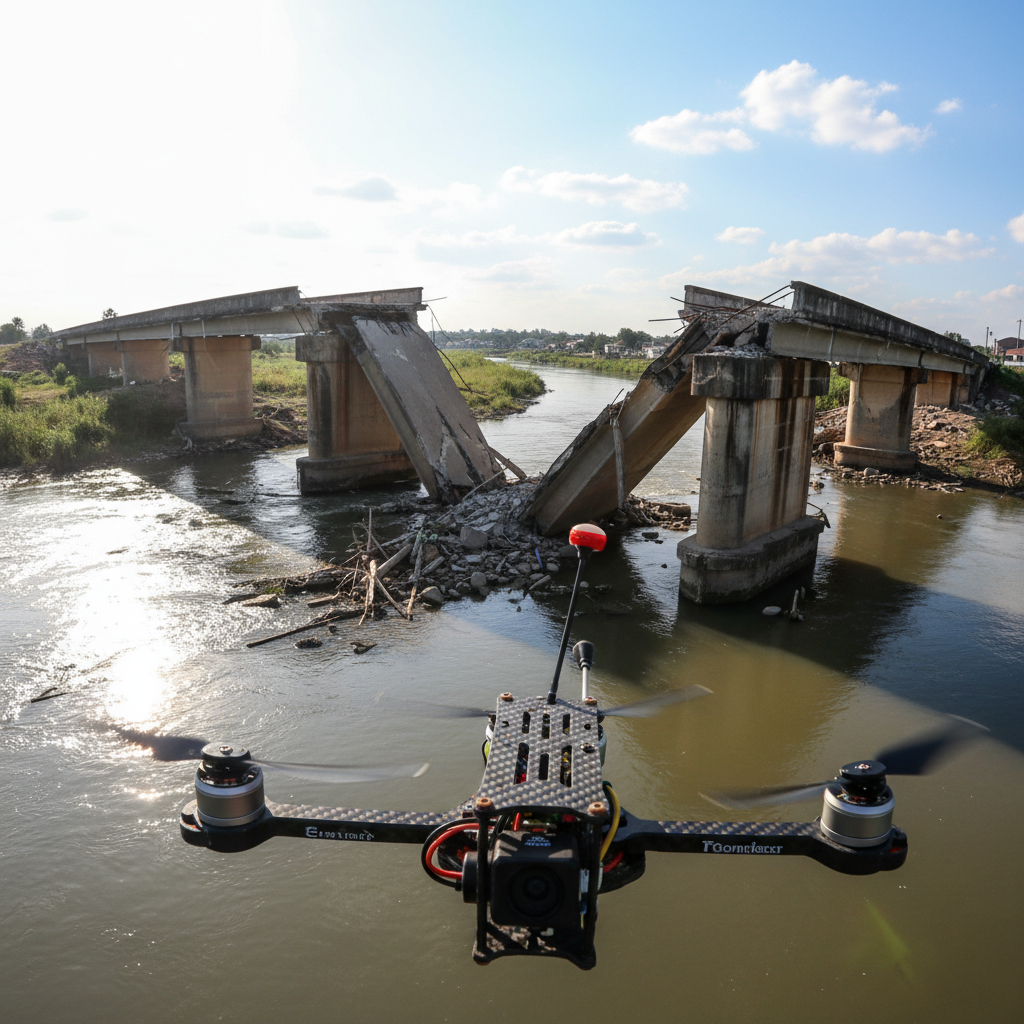
The Ukrainian military destroyed two bridges within Russia’s Belgorod region in a bold attack that showcased the growing battlefield impact of inexpensive, first-person-view (FPV) drones. The 58th Separate Motorized Infantry Brigade claimed the strikes against the stashes of Russian mines and ammunition, which were located under the two bridges near the border with Ukraine’s Kharkiv region, which “used them to resupply.”
In a statement, the Ukrainian unit said that Russia’s military had mined the bridges and made them ready for destruction to keep Russian troops near the frontline supplied. “In case of a surprise attack from our forces, the Russians were ready to blow them up at any moment,” it added.
The tactic of destroying bridges to halt a foe’s advance is nothing new. In fact, Ukrainian forces did the exact same thing when the Russian Federation invaded in February 2022. Ukraine blew up numerous bridges leading to the city of Kyiv during the first days of Russia’s full-scale invasion in an attempt to slow Moscow’s onslaught and protect the capital. Ukrainian forces have now seemingly done the same thing to Russian military.
Suspecting something was afoot, the 58th Brigade said it had noticed unusual activity at one of the bridges. “It became clear that something was going on there,” a brigade representative told CNN.
Standard reconnaissance drones could not fly underneath the bridge without losing signal, so the brigade sent in an FPV drone with fiber optics that could investigate the scene. The drone found a large cache of Russian anti-tank mines and other ammunition stashed beneath the bridge.
“We saw the mines, and we struck,” the brigade representative added.
Video released by the unit shows the drone flying toward the bridge, spotting the concealed munitions, then detonating in a huge explosion. A second camera situated nearby captured the explosion from a distance.
CNN geolocated the video to Russia’s Belgorod region, just across the border with Ukraine’s Kharkiv region. The unit then flew another FPV drone to a second bridge after similar activity had been spotted there.
On this occasion, the drone located yet another massive cache of Russian ammunition under the bridge and triggered another huge explosion. “(We) saw an opportunity and took it,” the brigade said in its statement.
In terms of price, the strike was cost effective, with each of the drones used reportedly costing 25,000–30,000 Ukrainian hryvnias ($600–$725).
Ordinarily, the destruction of bridges so far inside Russia would require far more costly guided missiles or precision bombs. For instance, Ukraine previously used U.S.-supplied HIMARS systems to strike targets in Russia’s Kursk region, which includes bridges and railway tunnels. A HIMARS rocket costs tens of thousands of dollars, and the launchers themselves run into the millions.
In stark contrast, the Belgorod strikes were made possible with drones costing less than a smartphone.
The Belgorod strike was the latest example of how Ukraine has been employing increasingly inexpensive drones on the battlefield. The platform, which typically comes with cameras and explosive payloads, has been used by Ukraine to attack targets deep inside Russia while also retaining valuable Western munitions.
In June, for instance, Ukrainian forces targeted Russian military airfields with small drones smuggled close to the facilities. The strikes destroyed or damaged dozens of Russian aircraft.
“Operations like these show how even relatively low-tech gear can achieve disproportionately big results when used in creative ways,” said military analyst Mykola Bielieskov, adding that drones provided a cheap and flexible way for Ukraine to offset the Russian military’s larger arsenal.
The attack on the Belgorod bridges occurred as Ukraine has been forced to repel a grinding Russian offensive in eastern Ukraine while also dealing with Moscow’s near-daily missile and drone attacks on Ukrainian cities.
Russian President Vladimir Putin has even refused to rule out a ceasefire until Moscow’s attack has met all of its objectives. Against that backdrop, the blowing up of the Belgorod bridges has offered a rare piece of good news for Kyiv.
Russian military has not commented on the attacks, which have been verified by CNN. Still, the strikes have cut off several Russian supply lines to troops on the border in the Belgorod region.
Innovation will be increasingly necessary to Ukraine’s war effort. With limited Western supplies and the Russian military holding numerical superiority in key areas, Kyiv will likely have to continue to improvise. In that respect, FPV drones, which are often put together using commercial components and then modified by volunteers, have become a Ukrainian military mainstay.
“The value of these drones cannot be overstated. They allow us to achieve results that would otherwise require weapons we don’t have,” the 58th Brigade representative said. Ukraine’s ability to strike so creatively and so far inside Russia may turn out to be decisive as the war of attrition drags on. For now, the two bridges in Belgorod stand as a potent reminder that even inexpensive weapons can be used to great effect.


