- calendar_today August 28, 2025
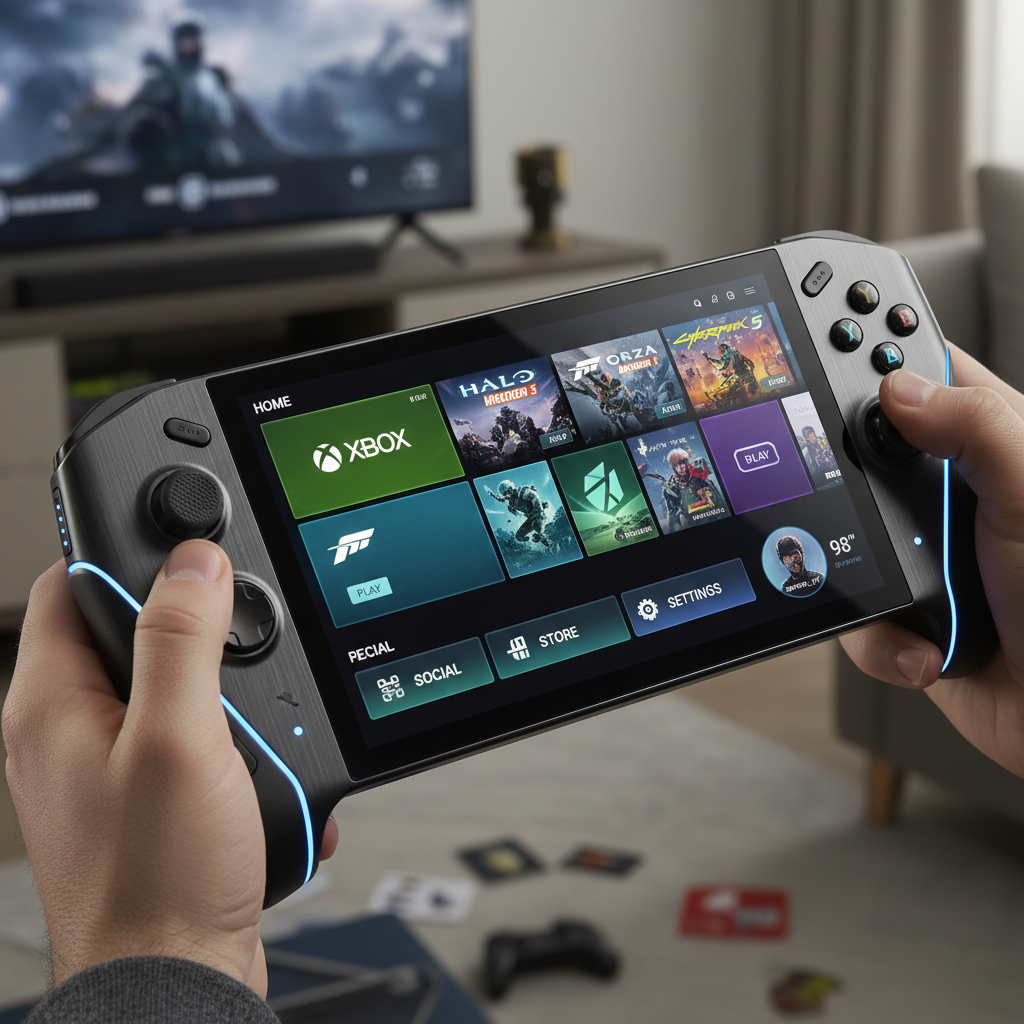
Microsoft has launched a significant initiative in the handheld gaming market through a fresh Xbox-branded user interface built expressly for portable Windows devices. Microsoft in partnership with Asus has developed an interface that will be available initially for the ROG Xbox Ally. This new interface abandons the traditional Windows desktop design to feature a tile-based full-screen layout that supports touchscreen and gamepad controls while delivering a gaming experience similar to that of a console.
The handheld gaming sector has been primarily influenced by Valve’s Steam Deck device which runs on SteamOS based on Linux. SteamOS lacks native support for all Windows games but enables many to run through Proton which has evolved significantly since its inception. Although the system demonstrates remarkable capabilities it cannot fully substitute Windows and remains incompatible with certain games. The system quickly gained considerable user interest because of its primary focus on gaming-first design and efficient performance.
Microsoft aims to combine Windows’ versatility with gaming console simplicity in their new Xbox user interface. This new system will enable users to play the extensive Windows game collection through a portable hardware-friendly format. Microsoft announced that the new user interface will be introduced on the ROG Xbox Ally first before being available on other ROG Ally variants. Additional Windows handhelds will receive the rollout beginning in 2025.
Microsoft has not officially confirmed that its latest interface originated from the 2022 internal “Windows Handheld Mode” concept but the similarities between them are evident. An internal hackathon generated this initiative which targeted Windows handhelds’ problems like inadequate touch support and restricted controller features through the development of a simplified gaming-oriented interface.
The new Xbox UI delivers substantial performance upgrades while providing an improved intuitive aesthetics. Microsoft reports that substituting the Windows desktop with their interface preserves several gigabytes of RAM and lowers energy use. The performance gains and extended battery life resulting from these savings serve as vital characteristics for handheld gaming systems. The regular ROG Ally devices depended on full Windows operation together with Asus’ Armoury Crate software resulting in extra system overhead. The Xbox UI enables seamless operation between tasks without imposing additional stress on the system.
The redesigned user interface does not restrict users from accessing the classic Windows desktop environment. Even though the traditional interface remains accessible its activation requires manual operation. The hybrid solution allows gamers to transition between a specialized gaming interface and the complete desktop operating system whenever they choose.
Valve enhances its market position through ongoing advances in SteamOS and Proton. The capabilities of Proton extend to support more Windows games while reaching out to non-Steam Deck devices such as certain ROG Ally models. Through its advancements SteamOS has enabled Linux to achieve more than 4% global desktop market share which represents a significant achievement for an operating system that used to be an outsider in mainstream gaming.
The recent focus on AI and security initiatives has caused Microsoft to slow its reaction to market changes. The influence of handheld gaming systems remained insignificant to Windows PC dominance for several years. The Steam Deck’s rise to success along with the advancement of platforms like SteamOS have contested the long-held belief that handheld gaming would not threaten Windows PC dominance. Now, Microsoft is finally responding.
Key takeaways from Microsoft’s move include:
- The ROG Xbox Ally will first showcase Microsoft’s new Xbox UI before the interface extends to additional devices beginning in 2025.
- The interface eliminates the classic Windows desktop to implement a full-screen tile-based system designed specifically for gaming.
- Microsoft states that their new UI design will lead to RAM savings and energy efficiency while enhancing system performance.
- Users can maintain complete control over their devices because the conventional desktop UI remains available.
The success of Microsoft’s Xbox UI as an industry game-changer or a strategic catch-up will depend on its adoption rate and performance effectiveness compared to SteamOS. But one thing is clear: Microsoft is finally taking handheld gaming seriously.