
- calendar_today August 17, 2025
It should have been an event about an EU trade deal. Instead, former U.S. president Donald Trump turned a press conference into one of his favorite topics—wind turbines. He had strong words, dubbing the turbines “a con job” that causes whales to “get loco,” birds to die, and accidents for people. The comments are not just the latest in a long line of Trump’s made-for-news-cycle quotes. They are part of a global pattern of conspiracy theories around clean energy that has been festering for over a century.
In the statements from last week, Trump repeatedly called the turbines “windmills.” This, too, is not new. It’s become part of a climate-denier trope. Such casual substitutions reflect older moral panics from earlier, more technologically dramatic industrial revolutions. Take another disruptive technology, like the telephone. The first phone exchanges were connected in 1878, and early users quickly became worried that their voice or body could transmit diseases through the device. Telephones making you sick is not exactly a new argument; both sound more bizarre to us now because the world has changed around them.
But a key difference is how the world has changed. Research shows anxieties about renewables are much more existential. Once they are part of a person’s belief system, facts do little to dislodge them. Fact-checking claims about wind turbines will never go as viral as dramatic conspiracy theories. That’s a huge problem for governments, companies, and institutions that want to speed up the transition to clean energy.
Anti-Wind Conspiracy Theories are Deeply Rooted
Climate science has been warning of potentially dramatic and relatively imminent shifts in weather patterns since the 1950s. But the renewable revolution, until quite recently, has often been sold to the public as an attempt to wrest control from the big fossil fuel companies.
Take an example from popular culture: in one episode of The Simpsons, the town of Springfield is kept in the dark by a towering, dome-shaped structure built by energy tycoon Mr. Burns to keep sunlight from reaching the town. Citizens who want to enjoy the sun are forced to buy power from Mr. Burns’ nuclear plant. It’s an obvious exaggeration of the kinds of tactics big coal, oil, and gas industries might use to maintain their power. But it still illustrated a key concern that clean energy would be delayed for the benefit of a small but powerful fossil fuel elite.
History has shown these concerns to be not entirely misplaced. In 2004, then–Australian Prime Minister John Howard created an industry group made up of fossil fuel executives: the Low Emissions Technology Advisory Group. Fossil fuel industry executives were handpicked to find ways to block or delay the rollout of clean energy technology. The group was convened not to promote a rapid transition to renewables, but to prevent it to maintain the dominance of coal, oil, and gas.
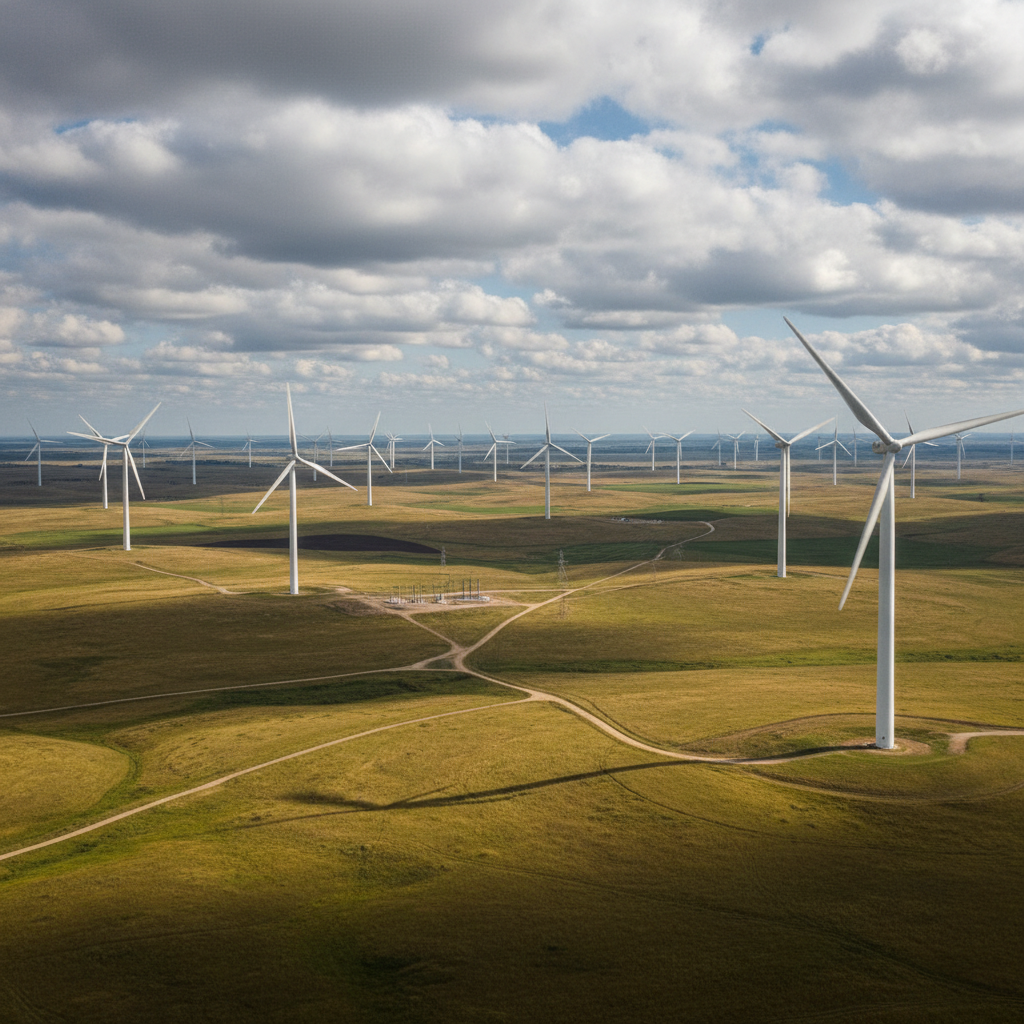
Wind farms, in particular, have long been the subject of conspiracy theories. Several criticisms were put forward to the public about the visual pollution of wind farms and turbine syndrome, a “non-disease” peddled by medics without any clear evidence. Wind turbines are also highly visible compared with other power generation technologies. Coal mines and oil wells, or oil refineries, are often not within sight of the public. Nuclear power plants are highly regulated and don’t always have massive turbines sticking out from them. Wind farms, by contrast, are often sited on visible ridgelines or rolling plains.
A recent study found that support or opposition to wind turbines was not strongly predicted by demographic or socioeconomic data. Instead, a more “fundamental” factor was whether an individual was prone to buy into conspiracy theories in general. The study, which Kevin Winter conducted in Germany, found “systematic evidence that conspiracy thinking, but not individualistic sociodemographic characteristics such as age, gender, education, and political orientation, explains opposition against wind turbines.”
Winter and his coauthors also studied wind farm opposition in the U.K., the U.S., and Australia. They found that people “who agree that either the government is hiding information from the public, that big business or secret societies are running the world, that climate change is a hoax, or that the world will soon end, are more likely to perceive turbines to be causing harm.”
Wind turbine skeptics, in other words, don’t tend to become more open-minded when you show them facts and evidence. Opposition to wind farms has a more psychological basis, in that it “goes against people’s sense of control over their lives” and “reflects the feelings of powerlessness that are increasingly present in Western societies.” In other words, presenting evidence that wind turbines do not kill people or spread disease does little to win over a wind farm skeptic. Opposition is “rooted in people’s worldviews.”
Wind farms are as divisive as ever. A new study finds conspiracy theories about renewables aren’t just whacky ideas in the minds of cranks, but evidence of deeper anxieties and discontent
Wind farms also occupy an important place in an increasingly divided and ideological world. Support for a large wind farm, with rows of turbines turning, might seem to show a triumph of science over nature, the power of engineers over the elements. It is an icon of human ingenuity and, crucially, a symbol of a new era of clean power.
Wind farms can just as easily be seen as an attack by the state or big business. They are a sign of one’s powerlessness and lack of control in the face of forces that do not represent their interests. These themes emerge time and again in studies of conspiracy theories or energy skepticism. Survey work also shows Trump’s more personal attacks, such as depicting wind farms as attacks on masculinity. Climate action or energy transition has taken on deep identity politics in corners of the “manosphere” that frequently blame women or those they cast as effeminate for their real or imagined lack of power.
The overall effect is to make large wind farms a kind of lightning rod for a number of cultural pressures. This transition we’re in the middle of, where human ingenuity is funneling into clean energy, is not only a technical one. It is also about identity and culture, and a loss of control, or at least a perceived sense of loss of control. People brought up in a world of fossil fuels—a world in which fossil fuels were more or less invulnerable and gave the lie to the environmental movement—wind farms are a visible sign of that age coming to a close.
Trump’s proclamations that wind turbines are killing everything or that windmills are “con jobs” are about more than mere provocation. The former president’s rhetoric is visually rich, echoing wider cultural concerns about renewable energy. His florid language of poisons and dead birds is way more likely to get shared or accepted as true than a more nuanced argument. But beyond the carnival barkers lies a deeper problem: opposition to wind farms or clean energy is not about wind farms.


