
- calendar_today August 8, 2025
.
U.S. President Donald Trump is embracing his reputation as a dealmaker in foreign conflicts by claiming he has already ended six wars in his second term. The boasts were made on Monday during a meeting at the White House with Ukrainian President Volodymyr Zelensky and several European leaders, where Trump also pledged progress toward ending the ongoing war in Ukraine.
“I’ve done six wars — I’ve ended six wars,” Trump said. “Look, India-Pakistan, we’re talking about big places. You just take a look at some of these wars. You go to Africa and take a look at them.”
Trump’s claim was trumpeted in advance by the White House, which has embraced the “President of Peace” brand. An administration statement earlier this month touted claimed achievements in the following countries and regions: Armenia and Azerbaijan, Cambodia and Thailand, Israel and Iran, Rwanda and the Democratic Republic of the Congo, Egypt and Ethiopia, and Serbia and Kosovo. The statement also noted efforts from Trump’s first term, including the Abraham Accords, which established peace between Israel and several Arab nations.
Ceasefires vs. Permanent Solutions
The Trump record on this score raises questions of whether he is actually providing real solutions or relabeling ceasefires as historic peace agreements. An Israel-Iran deal, for example, brought an end to a 12-day fight, but neither side showed any sign of easing underlying tensions over Tehran’s nuclear program.
His previous record for resolving foreign conflicts has also highlighted the limits of his style. He failed to bring a halt to violence between Israel and the Hamas movement, while summits with North Korean leader Kim Jong Un in Trump’s first term ended without progress on denuclearization, leaving Pyongyang with an expanded nuclear arsenal.
The peace record is also marred by a dearth of actual treaties between the parties, leaving some conflicts in abeyance rather than resolved.
Symbolic Deals
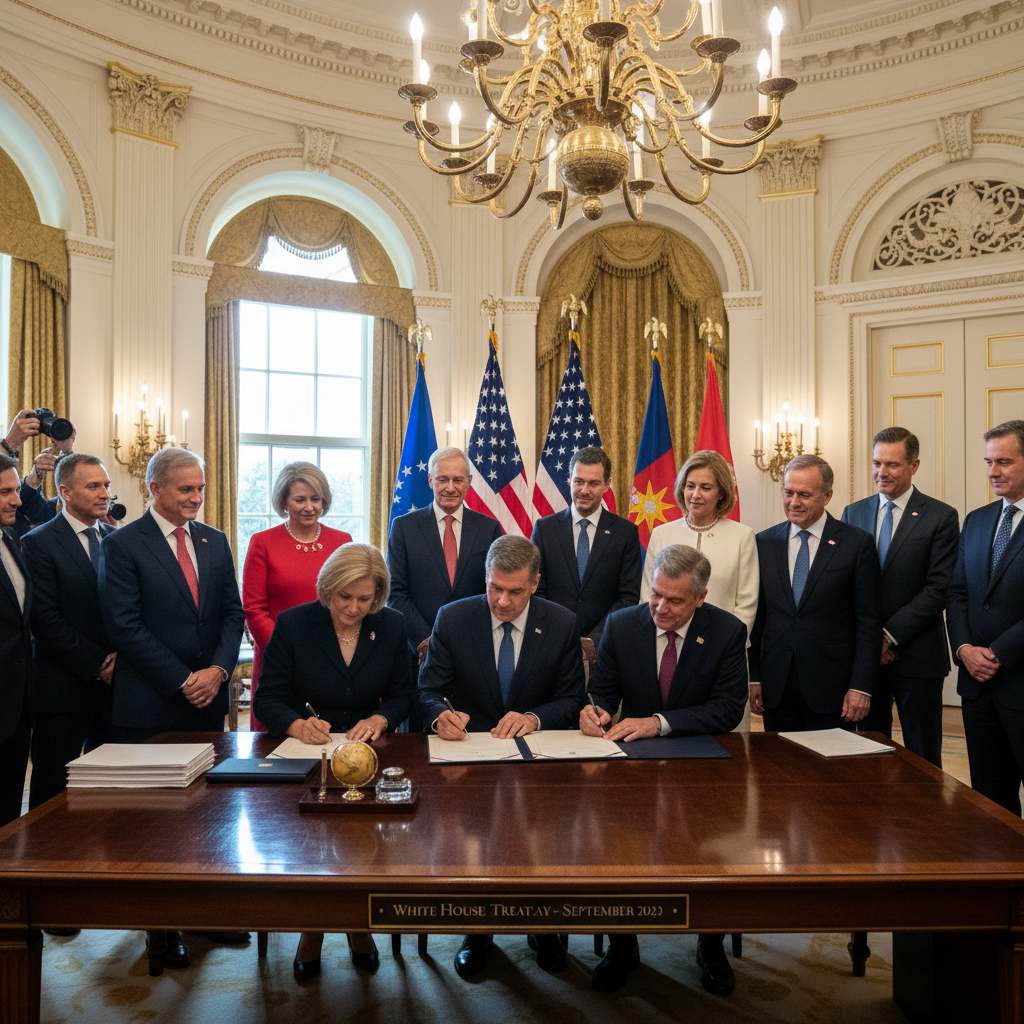
Despite such challenges, Trump has managed to sign some symbols wins, including bringing Armenia and Azerbaijan to the White House earlier this month to sign a declaration agreeing to recognize existing borders and renounce violence. The deal also included a U.S.-brokered transportation corridor, which Trump touted as the “Trump Route for Peace and Prosperity.” Azeri President Ilham Aliyev, who led the signing effort with his Armenian counterpart Nikol Pashinyan, called the agreement “a miracle,” though many difficult territorial questions remain.
Ceasefires in Southeast Asia
Trump has also shown how he deploys U.S. economic leverage to bring a halt to violence in Southeast Asia. In 2019, fighting between Cambodia and Thailand killed 38 people. Trump threatened to suspend trade deals with both countries unless they stopped the clashes, and the Association of Southeast Asian Nations (ASEAN) helped broker the final agreement. Cambodian Prime Minister Hun Manet still thanked Trump for his “extraordinary statesmanship” and nominated him for the Nobel Peace Prize.
The Trump approach was repeated in May when he intervened in a similar border flare-up between India and Pakistan. Pakistan welcomed Washington’s involvement, while India played down the importance of the U.S. role. The two sides have since reached a ceasefire, but the larger dispute over Kashmir remains unresolved and is vulnerable to another conflict.
Claims in Africa
Trump has also claimed credit for brokering progress in Africa. One such deal was between Rwanda and the Democratic Republic of the Congo, in which both countries recognized existing borders and agreed to disarm militia fighters. The M23 rebel movement rejected the deal, however, and experts have questioned whether it will be sustainable. Another factor is the increasing U.S. interest in the African region for its strategic competition with China, with the U.S. now seeking to boost ties with mineral-rich African countries that have been most friendly to Washington.
Another pair of claims relate to Egypt and Ethiopia, whose governments are locked in a bitter standoff over a Nile River dam project. Trump has pushed both sides to compromise, but so far no legally binding agreement has been reached.
Normalization measures between Serbia and Kosovo also trace back to Trump’s first term. He has since claimed credit for more improvements in relations, but the two countries remain at odds. The most recent round of talks was led by the European Union.
Process Not Agreements
The uneven record of Trump interventions in these cases is in part a product of his personal approach to international diplomacy. Lacking in subtlety and often bypassing traditional negotiations, his preference is for high-visibility announcements and rebranding the outcome with his own name. Critics have said that shrinking the State Department and the U.S. Agency for International Development in his first term made it harder to turn short-term deals into long-term peace.
Yet his interventions in some cases have also been seen as a useful form of pressure. In India-Pakistan tensions, for example, “the Trump administration’s involvement was handled in a professional way, quietly, diplomatically … finding common ground between the parties,” Celeste Wallander, a former assistant secretary of defense and now at the Center for a New American Security, told the Los Angeles Times in May.
Stopping violence is one thing, but with Trump turning his attention to Ukraine now, the question is how far he can take that approach. His record so far shows both: headline-grabbing agreements that don’t produce permanent peace, as well as some cases where U.S. pressure has been enough to prevent conflicts from getting worse.


