- calendar_today September 27, 2026
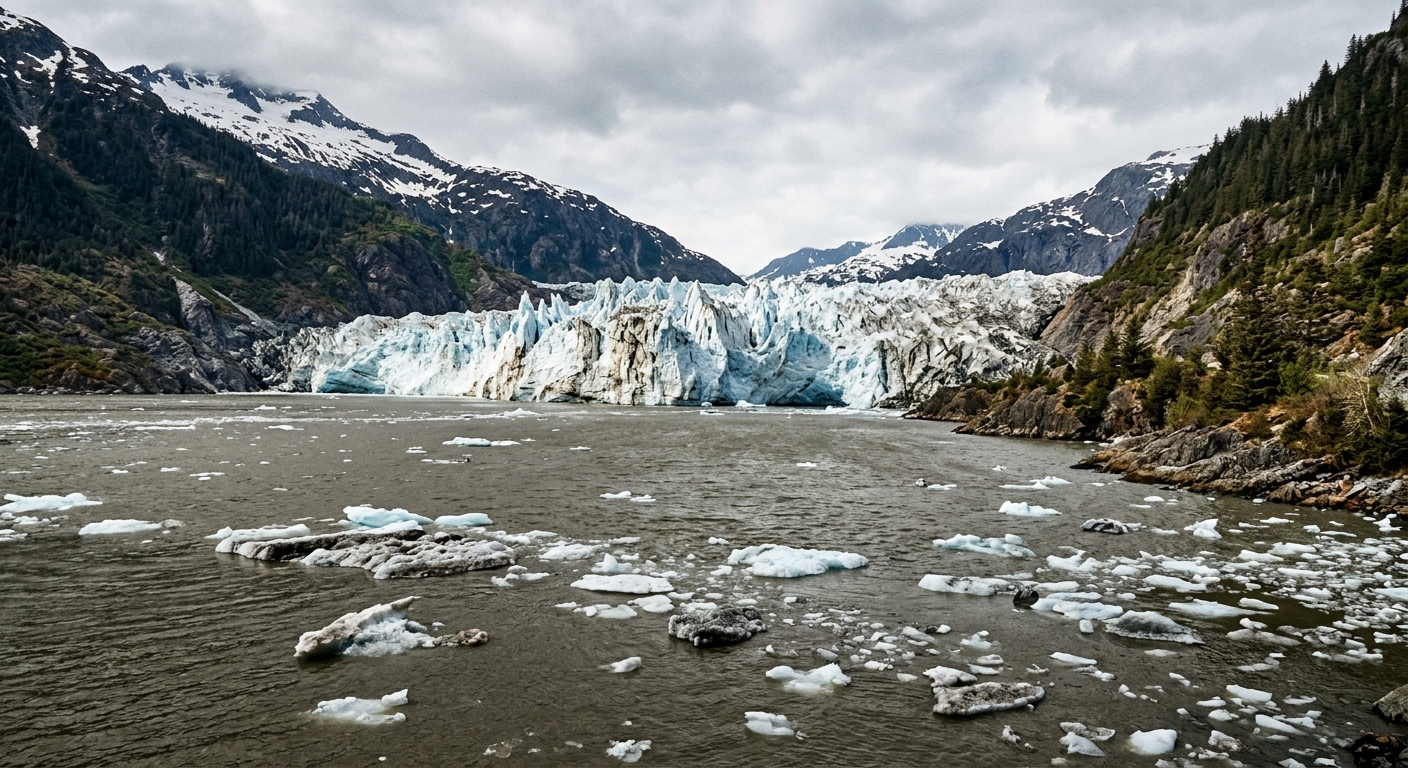
Alaska’s lake terminating glaciers are melting at unprecedented rates, according to recent research that emphasizes the critical environmental implications for the region. A collaborative study by the University of Oregon and Wrangell High School found that lake terminating glaciers, such as Shakes Glacier, play a pivotal role in shaping landscape transformation and contributing to sea level rise across Alaska.
Shakes Glacier: Monitoring Rapid Glacier Melt
The research team, led by graduate student Benson and Wrangell High School’s Shakes Glacier monitoring group, has highlighted the significance of glacier melt in reshaping Southeast Alaska’s natural environment. Over the past two decades, Shakes Glacier has receded by approximately 10,000 feet, averaging a dramatic retreat rate of 420 to 470 feet per year. This rapid glacier recession surpasses the losses seen in many marine-terminating glaciers and accentuates the urgency of continued glacier monitoring.
Comparative Insights: Shakes Glacier and Mendenhall Glacier
Benson’s study compared conditions at Shakes Glacier to those of the renowned Mendenhall Glacier near Juneau. Both glaciers terminate in lakes, but their local effects and environmental responses differ markedly. The Mendenhall Glacier feeds its adjacent lake with cold glacier meltwater, which was observed to cause notable lake temperature drops during summer. By contrast, Shakes Lake showed typical warming trends, unaffected by glacier melt to the same extent—likely due to its larger volume diluting the cooling impact.
Drone Mapping Uncovers Glacier Caves and Sediment
The research utilized drone surveys to capture detailed imagery of the Shakes Glacier terminus. These flights revealed not only the extent of glacier retreat but also the presence of glacier caves and significant deposits of glacier sediment. The identification of glacier caves and melt channels at the glacier’s base highlights the dynamic nature of glacier meltwater flows beneath the ice. Such discoveries are crucial for understanding the hidden pathways that control water and sediment movement, directly influencing the rate of glacier melt and retreat.
Lake Size, Water Temperature, and Glacial Dynamics
Lake temperature plays a central role in glacier dynamics. The team’s ongoing glacier monitoring found that larger lakes, like Shakes Lake, may reduce the direct cooling effect of glacier meltwater. This contrasts with smaller lakes, where glacier melt leads to pronounced temperature changes and more direct impacts on the aquatic ecosystem. These findings emphasize how hydrologic and thermal interactions differ across Alaska’s glacial lakes, affecting both glacier retreat patterns and downstream environments.
Regional and Global Implications of Alaska’s Glacier Recession
Researchers underscore that the rapid retreat of lake terminating glaciers in Alaska has broad consequences for surrounding communities, regional hydrology, and global sea level rise. Glacier meltwater, sediment transport, and shifting lake ecology influence not only natural systems but also local economies and cultural resources tied to glacial landscapes. The study reiterates the value of ongoing glacier monitoring, especially in regions like Alaska, where the effects of climate change manifest sharply in glacial environments.
The Path Forward: Collaboration for Continued Research
This research spotlights the importance of collaboration between universities and local schools, facilitating essential glacier monitoring and education about Alaska’s changing climate. Ongoing data collection and detailed field studies of glacier melt dynamics, glacier sediment, and glacier caves will remain vital for anticipating future trends and informing both scientific and community responses to environmental change in the region.