- calendar_today August 7, 2025
Tradition Meets Technology – How Alaska Artists Are Using AI Without Losing Their Stories
Alaska Creatives Are Exploring AI – Slowly, and on Their Own Terms
In Alaska, the arts are often a reflection of land, ancestry, and survival. Whether it’s ivory carving in Nome, storytelling in Anchorage, or painting in Sitka, creativity here tends to come from a place of experience. So when AI in Alaska art started creeping into the conversation, the approach wasn’t hurried—it was measured, and sometimes hesitant.
A digital illustrator in Juneau told me, “I used AI once to brainstorm color palettes for a tundra series. It helped with flow—but I still painted every piece by hand. The memories were mine, not the machine’s.” That kind of emotional boundary is something many Alaskan artists are navigating with care.
Filmmakers Are Turning to AI for Practical Help – Not Creative Direction
Alaska’s film scene is raw, intimate, and often self-funded. Independent filmmakers across the state are starting to explore AI for editing and sorting, especially when working with large volumes of natural footage or community interviews.
One filmmaker based in Fairbanks shared, “We used AI to group footage by tone and setting. It saved us hours. But the narrative? That still came from lived stories, and our elders helped shape it.” Across Alaska, especially in Native communities, storytelling isn’t just art—it’s responsibility. And AI’s role, if any, is carefully limited.
Artists Are Using AI in the Early Stages – But Trusting Their Instincts for the Rest
From the beading circles of Bethel to gallery spaces in Homer, artists are slowly integrating AI design tools into their workflow—but most are keeping them at arm’s length. A painter in Anchorage said, “It’s like a sketchbook that talks back. Sometimes it sees something I missed. But the vision—that still comes from inside me.”
For many here, AI in visual art is treated like a reference—not a collaborator. The final product still carries the voice, emotion, and intention of its maker.
Young Artists Are Blending Code with Culture
Students at the University of Alaska and smaller colleges across the state are beginning to experiment with creative tech in Alaska, often merging traditional art forms with digital tools. One student in Sitka built an AI-powered short film project that responded to viewer emotion—drawing from Tlingit oral histories for its narrative arc.
“The AI helped me shape how people experience the story,” they said. “But the heart of it—the message, the meaning—that came from generations before me.” This is what makes Alaska’s approach to AI different: culture comes first, and tech follows only if it earns its place.
Many Are Saying No—and That’s Respected Here
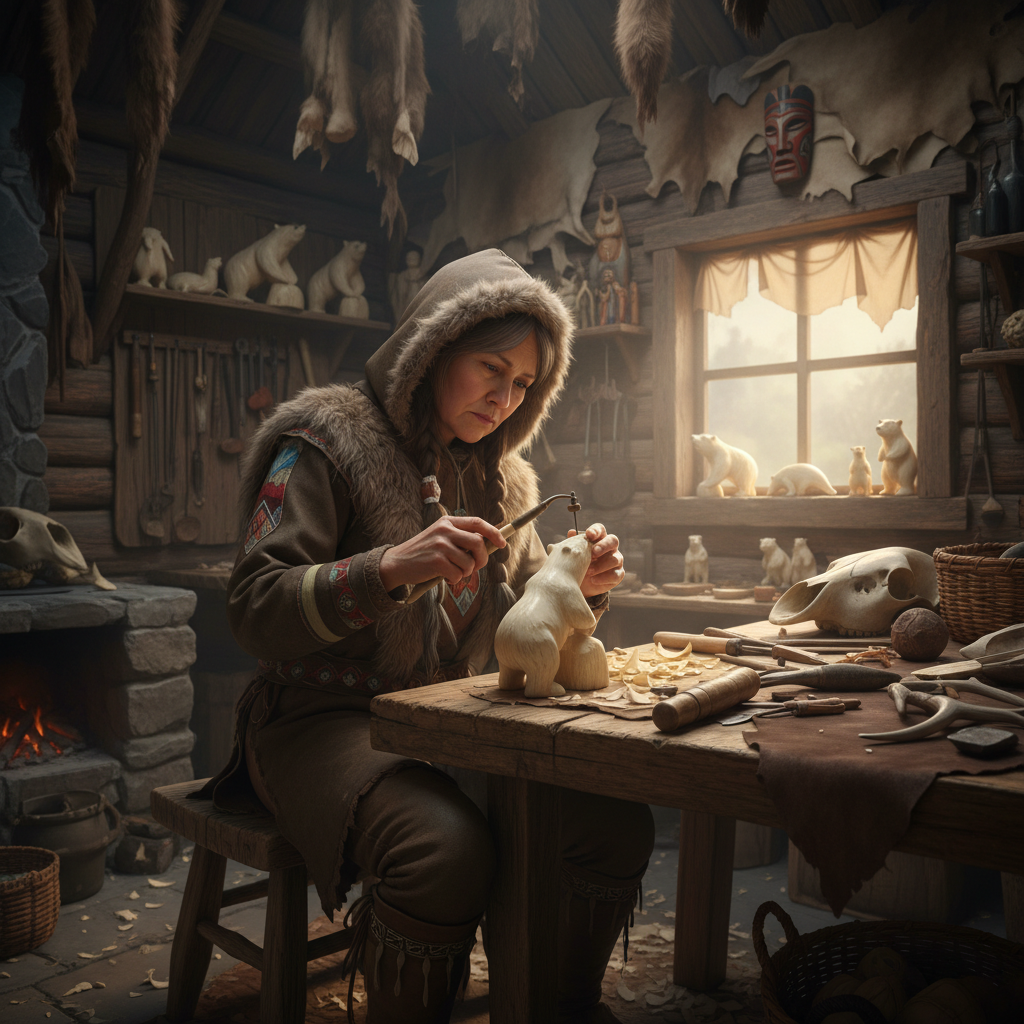
Some artists across Alaska are simply choosing not to use AI at all. And around here, that’s more than okay—it’s often celebrated. A carver in Utqiaġvik told me, “Every line in what I do comes from memory. My hands know stories my grandfather told me. No machine’s ever going to understand that.”
That deep connection to tradition—and a sense of place—is what keeps many artists grounded, even as tech keeps evolving.
How Alaska Artists Are (and Aren’t) Using AI
• For layout and concept – Some use AI to test visual or structural ideas
• To save time – Filmmakers and musicians use it to organize or speed up editing
• To help with access – In remote communities, AI sometimes helps bridge technical gaps
• But not for soul – The emotional and cultural center of the work always stays human
Final Thoughts
Alaska is wide and wild—and so is its creativity. Artists here aren’t jumping on trends. They’re asking tough questions: Does this help the story? Does it honor where I’m from? Does it still feel like me?
For some, AI has found a small place in their process. For others, it doesn’t belong at all. But the one thing they all agree on? The art that matters most comes from lived experience—carved, sung, filmed, or painted by hand.
In Alaska, the future might be digital—but the story still comes from the land, the people, and the heart.