- calendar_today September 1, 2025
Honda, the Japanese company well-known for its motorcycles and vehicles, has lately made a significant step toward space. Honda successfully and remarkably precisely launched and landed an experimental reusable rocket in a recent test.
The test flight happened at Taiki Town, a peaceful coastal region of Hokkaido, Japan, at a Honda-owned facility. By means of collaborations between local authorities and agencies like the Japan Aerospace Exploration Agency (JAXA), this town has been turning into a center for space development over recent years. Honda formally joined the increasing list of private companies testing space technology in the area with this launch.
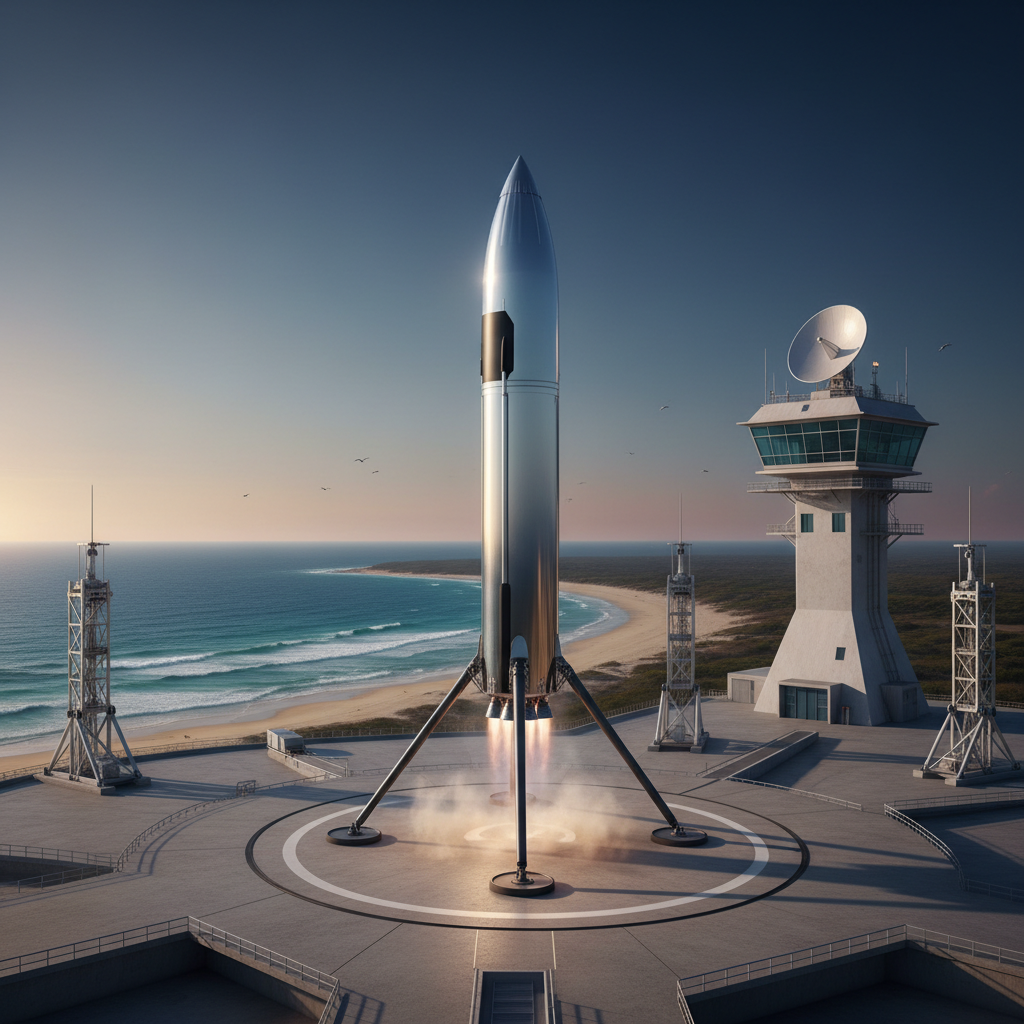
Rising to 890 feet, the rocket stayed in the air for 56.6 seconds before descending. Supported by four retractable landing legs, the test’s accuracy of the landing—that it touched down just 37 centimeters from the intended target—made the test standout. At liftoff, the rocket itself weighed more than 2,800 pounds and stood nearly 21 feet in height.
Honda is not rebuilding from nothing. The company’s experience with robotics and automated driving has greatly informed most of the technology used in this rocket. The trajectory, balance, and landing of the rocket are now under control using systems meant to enable cars remain in lanes and avoid collisions.
One of Honda’s strengths is their cross-over of technologies. Instead of redesigning difficult systems, the company is addressing spaceflight challenges using what it already knows: sensor data, control algorithms, and automation. For a business just starting on the scene, that is a sensible and reasonably priced strategy.
It is also not surprising that Honda is emphasizing reusability. Among the most significant developments in the space sector nowadays is rocket reusing. Launching into space becomes much less expensive, and businesses like SpaceX have already shown how crucial it is for next projects. Honda is obviously using that kind of thinking: create a rocket, land it safely, and get ready to launch it once more.
This excellent test marks only the start. Honda has made it abundantly evident that by 2029 it wants to have suborbital launch capacity. That implies not all the way into orbit but flying rockets to the edge of space, above 62 miles (100 kilometers).
Testing systems under conditions akin to space depends on such suborbital flights. They also create chances for gathering important flight data and hauling little payloads. Although they do not put satellites into orbit, they are significant benchmarks for businesses headed toward major space missions.
Honda has not yet said anything regarding commercializing its rocket program. The company is giving time to investigate its possibilities; the project is still in its basic research stage. But Honda obviously sees long-term promise in space for supporting its other technologies as well as for exploration.
Being able to use and control satellites could provide Honda a major advantage in its automotive and mobility companies since more sectors rely on satellites for navigation, data, and communication. It could enhance autonomous driving technologies to vehicle tracking.
Though it seems improbable, Taiki Town is becoming more and more significant in the private space industry of Japan. Its open airspace, coastal topography, and national agency support help create the perfect testing ground for rockets and aircraft technology.
Honda’s successful test flight lends weight to Taiki’s mounting reputation and demonstrates how even tiny towns might contribute to major technological advancements.
The test this week did not generate significant worldwide news. The rocket neither broke speed records, carry satellites, nor reached space. But it turned out to be rather significant: Honda takes space quite seriously.
Through such exact landing of the rocket on its first full attempt, the company demonstrated engineering prowess and meticulous planning. It also showed how current automotive technologies might be used for whole fresh frontiers.
It remains to be seen whether Honda keeps on building a full launch company or employs this technology to bolster its position in mobility. One thing is abundantly evident, though: the company’s goals are no longer anchored.
The horizon of Honda now stretches sky. And maybe beyond it as well.