
- calendar_today August 27, 2025
From oil to salmon, the Trump administration has singled out the ESA repeatedly since January. Conservationists are concerned about a series of executive orders in recent months that, they say, would make it easier for the administration to open federal lands for development without going through the environmental review process. The administration has also taken specific steps to undermine the law, such as proposing to ease rules that currently shield species that scientists deem threatened but that the administration has not officially recognized as such.
Even as the Trump administration wages its assault on the ESA, Burgum and other conservatives argue the law has failed. Strict rules, they say, have slowed or prevented development and failed to hasten recovery. Burgum said he sees the ESA as “Hotel California”: once you’re in, you can’t leave.
But conservation biologists and legal scholars argue that problem isn’t the law, but underfunding and erratic political support. “We continue to wait until species are in dire straits before we protect them,” said David Wilcove, an ecology professor at Princeton University. “That makes recovery far more difficult and expensive.”
David Wilcove, professor of ecology and evolutionary biology at Princeton University, said despite the law’s detractors, the ESA has largely worked as intended.
“The ESA works more like a critical care unit than a hotel,” he said. “It’s as though we built a great hospital but never funded enough doctors or equipment.”
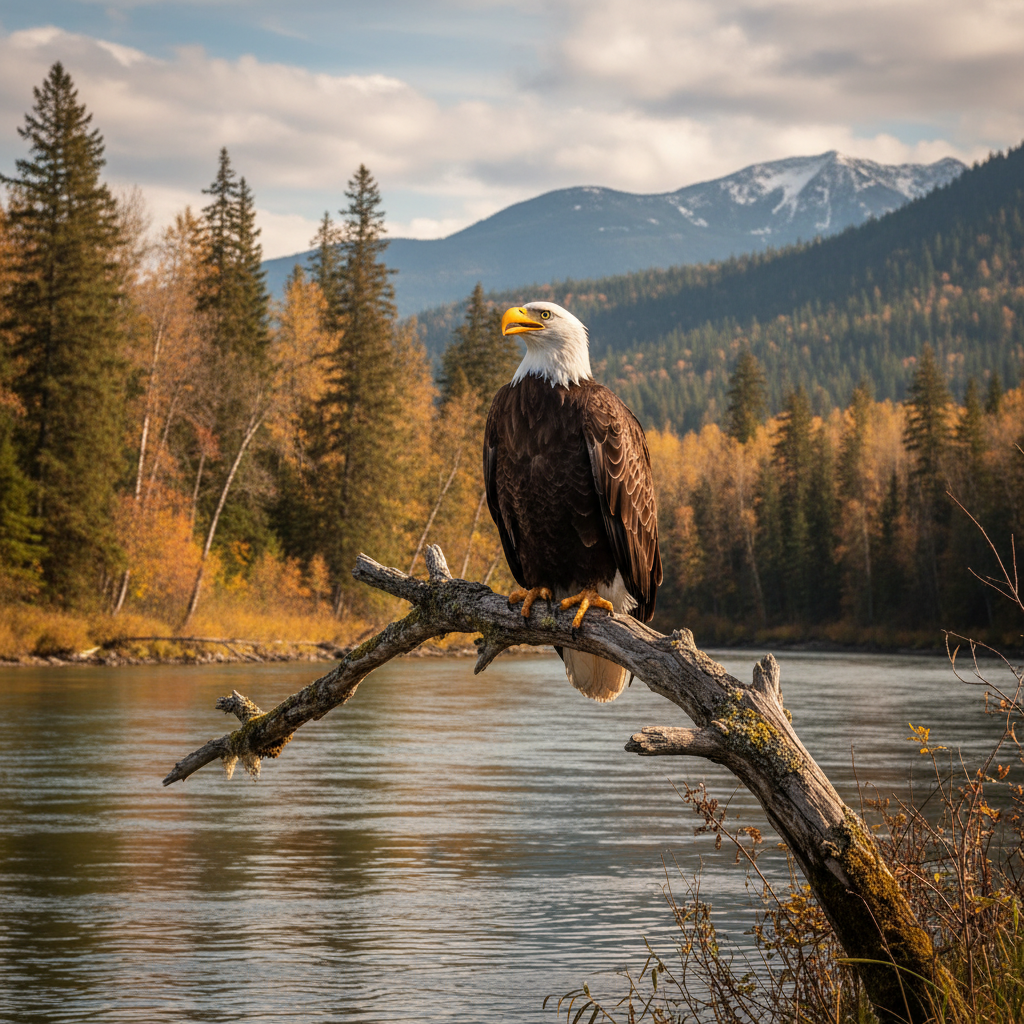
Wilcove, who has studied the ESA extensively, said its biggest success story was the iconic bald eagle. After habitat loss and the pesticide DDT decimated nesting populations in the 1960s, only a few hundred pairs remained in the lower 48 states. Numbers climbed slowly after DDT was banned, and the species was granted ESA protections in 1978. With its steady recovery, the bird was delisted in 2007 and now boasts nearly 10,000 pairs nationwide.
The ESA has also had big victories with American alligators, black-footed ferrets, American sea otters, California condors and Steller sea lions, just to name a few.
A big challenge is that the ESA covers private as well as public lands. That’s been a flashpoint for political controversy for decades. More than two-thirds of listed species live on private property, and about 10 percent exist on private lands alone.
“If you have a threatened or endangered species on your property, your ability to use that land is going to be limited, and you can be prosecuted,” Jonathan Adler, an environmental law professor at William & Mary, said. “That discourages landowners from cooperating.”
Wilcove said studies have shown these restrictions create “perverse incentives.” For instance, in one study of the red-cockaded woodpecker, timber was actually harvested earlier in areas with the bird than in control areas, presumably to get ahead of federal habitat restrictions.
Legislators have tried to address the issue with various incentives, including tax breaks and conservation easements, which give landowners tax breaks in exchange for forgoing certain land use rights in order to protect habitats. These programs have waned in recent years, said experts who track conservation funding, leaving some conservationists concerned.
An Argument: The Future of the ESA
The ESA used to be a bipartisan priority, but it is now one of the most litigated environmental laws in the country. Republicans have tried to chip away at the law multiple times. The George W. Bush and Obama administrations both rolled back federal habitat protections for endangered species, moves that were reversed when each party took power. Today, many experts fear the Trump administration’s executive orders combined with a conservative-leaning Supreme Court could result in the law’s provisions being significantly weakened, with little chance of a restoration.
Harvard Law School’s Andrew Mergen said the emphasis should be on investment and funding. “The law has prevented extinctions,” he said. “The real challenge is committing enough funding and political will to help species recover, not dismantling the protections that keep them alive.”
Despite its political battles, Wilcove pointed to signs that there’s hope for the ESA, too. In July, the U.S. Fish and Wildlife Service removed the Roanoke logperch from the endangered species list, saying that reintroduction and dam removals, along with nearly three decades of wetland restoration, had allowed it to recover. Burgum hailed the announcement as “proof” the ESA no longer functions like “Hotel California.”
But Mergen and Wilcove both noted those efforts began long before Trump was in office. “The optimistic part,” Wilcove said, “is that we know how to save species when we invest in them. The question is whether we’ll make that commitment.”


