- calendar_today August 14, 2025
While Silicon Valley and Phoenix are often centre stage in America’s AI race, Alaska—isolated and vast—remains a silent observer, cautiously joining the conversation. Nvidia’s projected rise to a $200 stock price in 2025 may feel distant from the icy coastlines of Kodiak or the oil fields of Prudhoe Bay, but the state is beginning to recognise its stake in the AI future.
In Anchorage, where tech infrastructure is modest compared to the Lower 48, local leaders are watching Nvidia’s trajectory with growing curiosity.
“We’re not chasing Silicon Valley, but we do need to modernise how we manage logistics, climate modelling, and even public safety,” said Greg Benson, a systems engineer with the Alaska Department of Transportation. “AI is going to help us, whether or not we invest in it early.”
AI’s Promise for Climate and Wildlife Monitoring
One of Alaska’s most urgent needs is climate resilience. Melting permafrost, shifting wildlife patterns, and rising coastal erosion require real-time monitoring and data analysis, areas where Nvidia’s GPU technology plays a critical role.
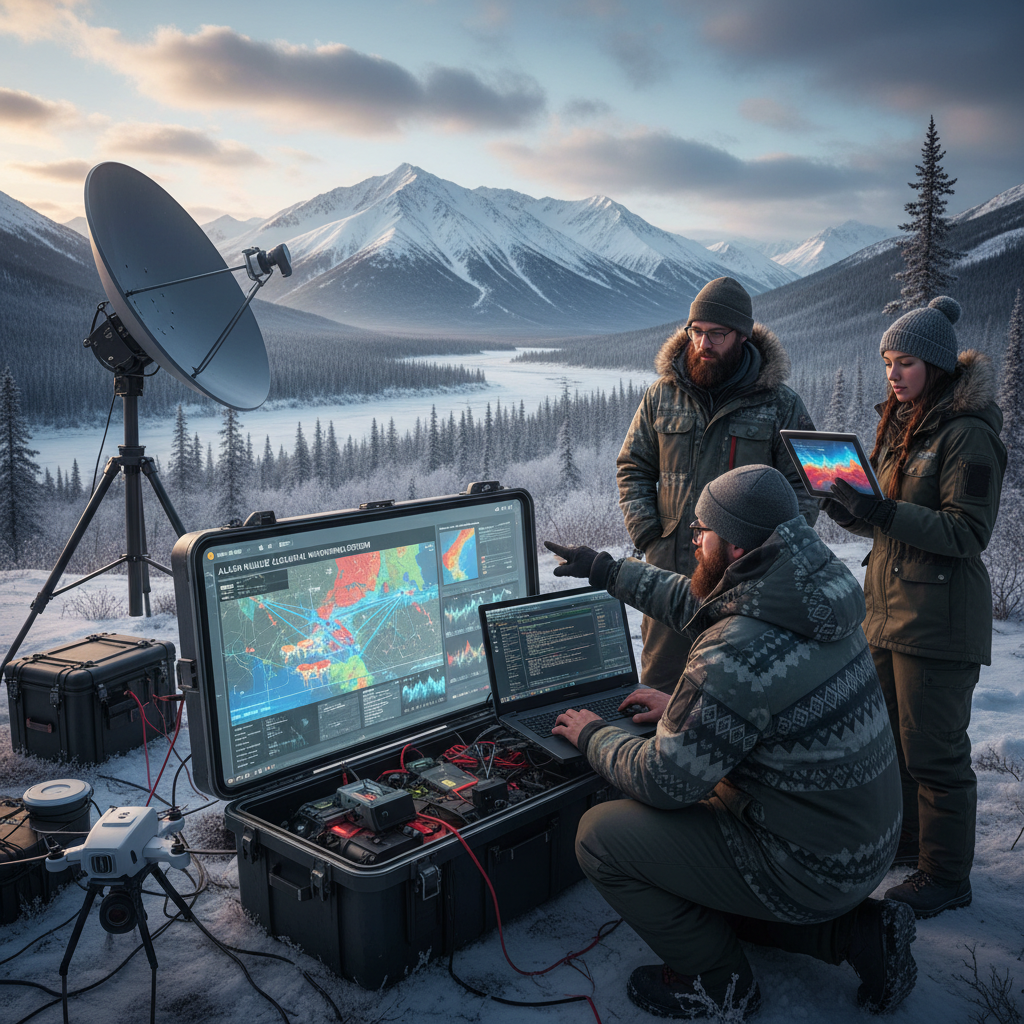
At the University of Alaska Fairbanks, researchers are leveraging Nvidia-backed tools to process satellite imagery and drone surveillance data for tracking polar bear populations and sea ice movements. These AI-enhanced systems process terabytes of environmental data much faster than traditional CPUs, delivering insights essential for both ecological preservation and indigenous communities.
“Without GPU acceleration, we’d wait weeks for results. With Nvidia-powered systems, we can respond in hours,” said Dr. Lena Morrison, lead scientist at the Arctic Research Consortium.
Remote Industry, Real Needs
In industries like fishing, mining, and oil, Alaska’s economy could benefit from Nvidia-powered AI systems to improve safety, efficiency, and long-term viability.
AI-driven sensors powered by Nvidia’s Jetson platform are being piloted on commercial fishing vessels to monitor fish behavior and automate bycatch reporting—potentially a game-changer for regulatory compliance in the Bering Sea.
In mining, companies in the interior region are beginning to use machine learning for resource estimation and drilling optimization, reducing both cost and environmental damage.
These niche use cases may seem small on a national scale, but for Alaska, they represent a vital pathway to keeping remote operations competitive without relying solely on costly manpower.
Barriers Remain: Infrastructure and Awareness
Despite the promising signals, AI adoption in Alaska faces serious hurdles. Broadband access remains limited in many rural areas. Energy prices in remote villages can soar, making high-powered GPU systems difficult to deploy or maintain.
And while Nvidia’s June 2024 10-for-1 stock split has captured national attention, there’s little retail buzz about it in Alaska. Local investors remain more focused on traditional sectors like energy and transportation.
“There’s interest, but no real infrastructure yet,” said Carla Tsosie, a small-business advisor in Bethel. “We need education and investment to close the gap. Until then, Nvidia’s $200 stock projections feel more like headlines than action items.”
Alaska’s Universities Prepare Slowly for the Shift
The state’s higher education system is moving gradually toward AI readiness. The University of Alaska Anchorage has introduced elective courses in machine learning and GPU computing, often centered around Nvidia’s CUDA platform.
These programs are tailored for local needs: Arctic logistics, aviation safety, and geospatial mapping. While enrollment is small, faculty members see them as planting seeds for the future.
“We’re not training AI influencers,” said Dr. Thomas Weller, professor of engineering. “We’re training the people who will maintain Alaska’s energy grid, keep planes flying, and adapt to climate shifts—with help from GPU-powered simulations.”
Looking Ahead—Not Too Far Behind
While Alaska may lag in adoption compared to states like Texas or California, it is not without a future in AI. Nvidia’s push into decentralised GPU networks and edge AI systems may give rural regions like Alaska a chance to participate without massive data centre investments.
Local interest may grow if Nvidia reaches its $200 per share target in 2025, turning abstract technology into tangible financial conversations for residents.
Until then, Alaska is watching—not from the sidelines, but from a unique vantage point where innovation must meet resilience.