- calendar_today August 13, 2025
Alaska’s commercial real estate (CRE) market in 2025 reflects the state’s unique blend of environmental challenges, economic dependence on natural resources, and renewed federal interest in Arctic infrastructure. While it lags behind lower-48 states in terms of transaction volume and speculative development, Alaska’s recovery is defined by steady institutional investment, logistics expansion, and strategic upgrades in public-sector buildings.
Anchorage, Fairbanks, and Juneau remain the state’s primary CRE hubs, but smaller communities—from Nome to Bethel—are also experiencing focused growth, particularly where federal grants, energy transition efforts, and climate resilience converge.
Anchorage Leads a Moderate Urban Recovery
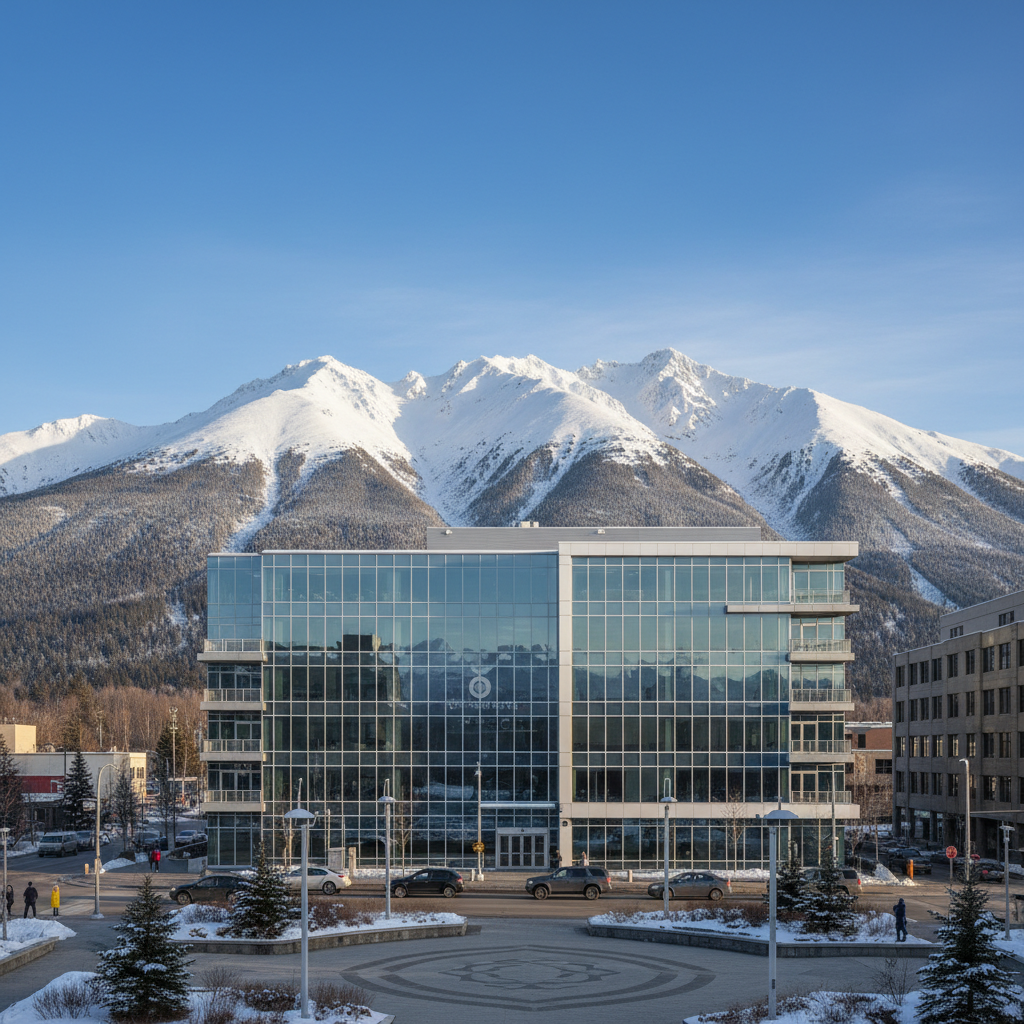
Anchorage continues to serve as Alaska’s commercial capital, and in 2025, the city is experiencing gradual but stable growth across key CRE sectors. With a population just under 290,000, it hosts the state’s largest concentration of healthcare, retail, logistics, and education infrastructure.
Retail: Open-air strip centers and grocery-anchored plazas are seeing renewed leasing activity as consumer spending rebounds and tourism strengthens. Big-box retailers have stabilized after several exits in 2020–2022, and local entrepreneurs are reoccupying vacated inline retail units. The Midtown and South Anchorage retail corridors are seeing increased foot traffic, and mixed-use developments combining retail and housing are gaining traction near transit corridors.
Office: Anchorage’s office vacancy hovers around 15%, though the downtown core has higher availability. The city’s relatively small office inventory has helped it avoid the deep vacancy issues of larger cities. Government and healthcare tenants continue to anchor leases, while remote and hybrid work have reshaped leasing patterns. Smaller footprints and coworking spaces are replacing traditional multi-floor leases.
Industrial: The industrial market is tight, with low vacancy and rising demand driven by supply chain diversification and expanded air cargo activity. With the Ted Stevens Anchorage International Airport among the world’s busiest cargo hubs, logistics and cold storage space near the airport is at a premium. Developers are eyeing West Anchorage and Ship Creek for new warehouse builds, though construction is limited by permafrost and infrastructure constraints.
Rural and Tribal Infrastructure Boom Underway
A defining feature of Alaska’s 2025 CRE recovery is the accelerated investment in rural infrastructure—most of it funded through federal programs like the Infrastructure Investment and Jobs Act (IIJA) and the Indian Housing Block Grant (IHBG).
Dozens of tribal communities across Western and Northern Alaska are receiving capital for new public buildings, renewable energy facilities, and climate-resilient housing. Key projects include:
- Healthcare clinics and public safety buildings in villages such as Dillingham, Kotzebue, and Unalakleet.
- Modular school facilities adapted for cold-weather deployment, with contractors utilizing barge logistics to deliver materials during the summer thaw.
- Water and wastewater systems in areas previously dependent on “honey bucket” waste removal.
These projects may not show up on traditional CRE trackers, but they are reshaping construction demand and providing long-term leasing opportunities for service providers and contractors.
The Energy Transition and Its CRE Ripple Effect
Alaska’s economy remains heavily reliant on oil, with revenues from North Slope production funding over 85% of the state budget. However, in 2025, the energy transition is finally starting to influence CRE demand.
- Carbon capture and storage (CCS) facilities proposed near Prudhoe Bay are generating permitting activity and early-stage land planning.
- Renewable microgrid projects—especially in remote villages—are increasing demand for energy infrastructure engineering offices and contractor staging areas.
- Geothermal research facilities near Mount Spurr and the Aleutian Islands are attracting interest from academic and public-private partnerships.
These trends are creating opportunities for specialized industrial and lab space development near Anchorage and Fairbanks. At the same time, state agencies are seeking commercial properties to host workforce training centers focused on renewable energy careers.
Military and Government Real Estate Drives Stability
Alaska’s vast military footprint continues to provide a critical backbone to its commercial real estate economy. Bases such as Joint Base Elmendorf-Richardson (JBER) and Eielson Air Force Base near Fairbanks are seeing renewed investment in 2025, tied to Arctic strategy and Indo-Pacific security.
- Eielson’s F-35 expansion has created stable demand for contractor facilities, on-base retail, and military housing development.
- The Army Corps of Engineers and FEMA are actively leasing office and field space for climate resilience and emergency response operations.
- Local school districts near military zones are leasing modular classroom buildings as population shifts bring higher student enrollments.
Anchorage landlords are benefiting from long-term federal leases and government contractor demand, particularly in suburban industrial corridors and underutilized office buildings.
Multifamily and Housing: Pressures Persist
Alaska’s housing shortage remains acute in 2025. Anchorage’s multifamily vacancy rate sits below 4%, and rents have risen over 12% year-over-year in some neighborhoods. Construction is sluggish due to high material costs, skilled labor shortages, and complex zoning.
Developers are experimenting with prefabricated and modular apartment units to reduce build times and costs. Pilot projects in Midtown Anchorage and near UAA (University of Alaska Anchorage) are targeting workforce renters, medical personnel, and university students.
Fairbanks and Juneau are also experiencing rental crunches, especially among seasonal workers and military families. Affordable housing tax credits and tribal housing grants are critical to enabling new multifamily development, but delays in permitting and infrastructure often slow progress.
Climate Adaptation Real Estate on the Rise
With Alaska warming more than twice as fast as the rest of the U.S., commercial buildings are being redesigned for thawing permafrost, flooding, and wildfire risk.
- Elevated foundations and cold-weather building envelopes are now standard for most new construction in vulnerable zones.
- The Alaska Housing Finance Corporation is funding energy-efficient retrofits for older office and healthcare buildings.
- Climate-resilient schools and medical centers are emerging in Nome, Barrow, and other Arctic communities, creating long-term construction pipelines and specialized leasing opportunities.
Alaska’s commercial real estate recovery is deeply tied to these climate adjustments, creating a hybrid CRE profile where environmental engineering and government funding matter as much as private-sector demand.
Investment Trends: Institutional Eyes, Local Knowledge
Alaska remains a small CRE market in national terms, but 2025 is seeing growing institutional interest in infrastructure-aligned projects. Public REITs are largely absent, but private equity firms, infrastructure funds, and tribal corporations are active in hospitality, logistics, and public building development.
Land ownership structures—especially Native Corporations under the Alaska Native Claims Settlement Act (ANCSA)—mean that successful investment often hinges on joint ventures and local partnerships. Investors prioritizing ESG principles are particularly interested in Native-led housing and energy projects that address long-term sustainability and local employment.
Steady, Grounded, and Strategically Important
Alaska’s commercial real estate market in 2025 is not booming—but it is rebuilding with purpose. Anchored by energy, stabilized by government presence, and reshaped by climate realities, the state’s CRE environment is attracting serious attention from contractors, infrastructure investors, and long-term developers.
The future of Alaska’s real estate isn’t just urban—it stretches from the docks of Anchorage to remote tundra communities, underscoring the need for adaptive thinking and Arctic-ready design. The Last Frontier may be rugged, but its recovery is very real.