- calendar_today August 10, 2025
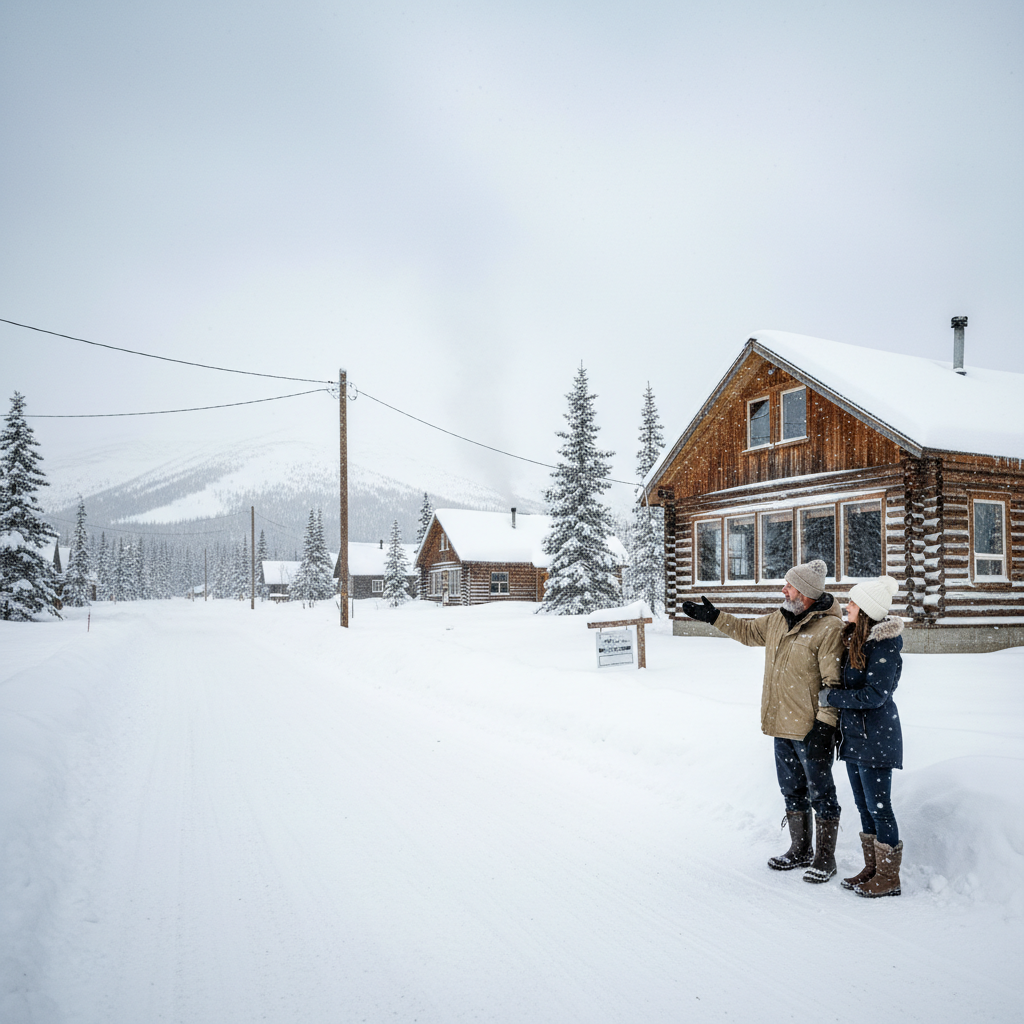
After years of disruption from the pandemic and supply chain volatility, Alaska’s housing market in 2025 is now locked in place. The freeze isn’t defined by plummeting prices or rising foreclosures—instead, it’s a standstill created by ultra-low inventory, surging mortgage rates, and reluctant sellers who are holding onto low-interest loans secured in previous years.
From Anchorage to Fairbanks to coastal and rural communities, real estate professionals say the housing market has entered a deep freeze. Here are five key statistics that explain what’s happening and what it means for homebuyers in Alaska this year.
1. Mortgage Rates Stay Stuck Above 6.8%
One of the most significant roadblocks to homeownership in Alaska remains the stubbornly high mortgage rate environment. As of July 2025, Freddie Mac reports that the average 30-year fixed mortgage rate hovers at 6.91%, barely below its 2023 peak and a sharp contrast to the sub-4% rates many Alaskans locked in pre-pandemic.
This has caused what economists call the “lock-in effect.” With more than 60% of Alaskan homeowners holding mortgages under 4%, many are unwilling to sell and trade up to a new loan with a dramatically higher interest rate.
“There’s virtually no movement from current homeowners,” said Andrea Hines, a real estate agent based in Anchorage. “Even those who might want to upgrade or relocate are choosing to stay put because they don’t want to lose their low-rate mortgages.”
Though inflation has cooled to just under 3% nationally, the Federal Reserve has been slow to lower rates, opting instead for a cautious approach that continues to suppress real estate activity across Alaska.
2. Inventory Shrinks 25% Statewide
Alaska’s already tight housing market has become even more constrained in 2025. According to Alaska Multiple Listing Service (MLS) data, the number of active residential listings across the state is down 25% year-over-year.
In markets like Juneau, Wasilla, and Fairbanks, the shortage is even more severe. Listings in these areas have fallen by as much as 30% compared to summer 2024, frustrating buyers who face bidding wars despite elevated borrowing costs.
New housing construction, which helped boost supply during the early post-pandemic recovery, has pulled back significantly. Builders are scaling down amid reduced demand, labor shortages, and rising materials costs, further exacerbating Alaska’s supply problem.
“We’re seeing a severe imbalance between supply and demand,” said Jeffrey Sweet of the Alaska Association of Realtors. “People want to buy, but there’s just nothing available—and that’s holding prices firm.”
3. Home Prices Hold at a Record High of $417,000
Despite fewer transactions and slowed buyer interest, Alaska’s home prices remain elevated. The state’s median home price hit $417,000 in Q2 2025, according to Redfin, reflecting a 3% increase from the same period in 2024.
This seems counterintuitive in a sluggish market, but the lack of inventory is keeping prices propped up. Areas around Anchorage, Eagle River, and the Kenai Peninsula have seen especially stubborn price resilience, with limited listings continuing to draw competitive offers.
“Prices aren’t going down, and that’s largely because we don’t have enough homes on the market,” said Lisa Rae, a broker in Palmer. “Even buyers who are willing to stomach a 7% interest rate still have to fight over the few properties available.”
In remote communities, where development is often limited by geography and weather conditions, the affordability challenge is even more acute.
4. First-Time Buyers Nearly Shut Out of the Market
One of the starkest consequences of Alaska’s frozen housing market is the sharp drop in first-time buyers. In 2025, just 24% of all home sales in Alaska involved first-time buyers, the lowest share in over a decade, according to the National Association of Realtors.
This is due to a confluence of factors:
- Higher mortgage rates inflating monthly payments
- Steady home price appreciation
- Limited affordable inventory
- Higher costs of living and student loan burdens
- Average down payments exceeding $70,000 in major Alaskan metros
For younger Alaskans and those new to the housing market, these barriers are proving insurmountable.
“The dream of owning a home is slipping further away for many residents,” said Terry Lowe, an analyst with the University of Alaska’s Institute of Social and Economic Research. “Unless we see meaningful policy intervention or lower interest rates, this generation may be renting far longer than their parents did.”
5. New Construction Falls 14% Amid Cost and Labor Issues
The slowdown isn’t just on the buyer side—builders across Alaska are pulling back, too. The U.S. Census Bureau reports that single-family housing permits in the state fell by 14% in the first half of 2025 compared to the same period last year.
Several factors are discouraging developers:
- High construction costs due to supply chain disruptions
- Persistent labor shortages in trades and skilled workers
- Permitting delays, especially in protected or rural zones
- Decreased demand from buyers deterred by high interest rates
Many builders are pivoting to multi-unit rentals or build-to-rent strategies, particularly in areas like Anchorage and the Matanuska-Susitna Borough, where rental demand remains strong.
“Margins are thin, and uncertainty is high,” said Dave Chandler, a regional developer in Juneau. “We’re building fewer homes and more rentals because that’s where the demand is and the math makes sense.”
What Experts Say About Alaska’s Housing Freeze in 2025
Economists and real estate professionals agree that Alaska’s market freeze is not a crash—it’s a stall. There’s no surge in foreclosures or panic selling, but rather an environment of hesitation and imbalance.
“This isn’t 2008,” said Nancy Fielding, a housing policy expert in Fairbanks. “It’s more like a traffic jam—nobody’s moving because the incentive to move has disappeared.”
Analysts suggest that relief could come if mortgage rates fall below 6%, unlocking activity from both buyers and sellers. Others argue that wage growth, better infrastructure investment, and strategic zoning reforms are needed to spur new construction and affordability across the state.
What Alaskan Buyers Should Watch in Late 2025
If you’re considering buying in Alaska, the second half of 2025 could offer strategic opportunities. Experts recommend watching for:
- Any interest rate cuts from the Federal Reserve
- Seasonal slowdowns in prices during fall and winter
- Government incentives or new loan programs
- Local softening in overbuilt or overvalued submarkets
Until then, financial preparation, pre-approval, and flexibility with location or property type will be essential.
A Frozen Market in the Last Frontier
Alaska’s housing market in 2025 isn’t collapsing—it’s frozen in place. With inventory scarce, interest rates high, and prices unmoved, Alaskan buyers are stuck waiting for a thaw. Whether that comes through federal policy, economic shifts, or grassroots innovation remains to be seen.
For now, Alaskans hoping to buy a home in 2025 need patience, persistence, and a long-term perspective as they navigate one of the most challenging housing markets the state has seen in years.