- calendar_today August 9, 2025
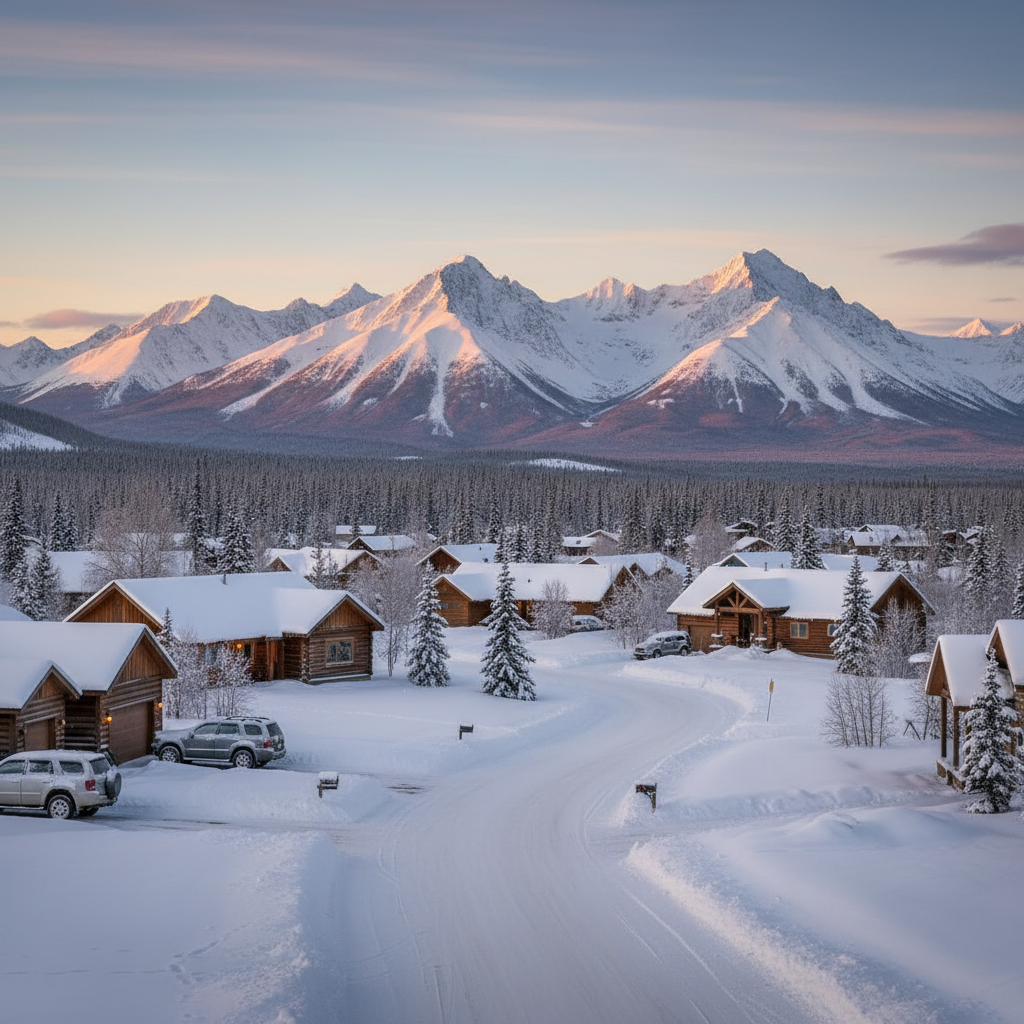
In 2025, Alaska’s housing market is facing a notable cooldown after years of pandemic-era growth. Once a region drawing buyers for its vast landscapes and relatively affordable prices, Alaska now finds itself caught in the broader national freeze in real estate activity. The combination of rising interest rates, constrained inventory, and shifting population dynamics is pressing pause on a market that was once moving steadily forward.
Though Alaska’s real estate has historically moved to its own rhythm, 2025’s challenges are echoing those faced nationwide—but with a uniquely Alaskan twist.
Mortgage Rates: The Chilling Effect
The most immediate factor behind the market freeze is the continued rise in mortgage rates. While interest rates in the Lower 48 hover between 7% and 7.5%, Alaska’s rates tend to be slightly higher due to its remote location, elevated construction costs, and fewer lender options. This reality has sidelined many would-be buyers, especially in Anchorage, Fairbanks, and Juneau.
Even for buyers with solid credit, monthly mortgage payments have become difficult to manage. A median-priced home in Anchorage now commands nearly $3,000 per month in mortgage payments—pricing out much of the working-class population. As a result, buyer demand has slowed significantly across urban and rural areas alike.
Inventory Remains Tight
One of the most stubborn issues in Alaska’s market is the limited inventory. In 2025, homeowners are holding onto their properties, unwilling to give up pandemic-era rates of 3% or less for today’s more costly financing. This “lock-in effect” is freezing supply, creating a severe imbalance between demand and available listings.
According to the Alaska Multiple Listing Service, active listings across the state dropped 12% year-over-year in Q2 of 2025. In Fairbanks and Mat-Su Valley, multiple counties reported fewer than two months of inventory—well below the healthy six-month benchmark.
Urban vs. Rural: Diverging Trends
Urban centers like Anchorage and Juneau have seen price appreciation stall. The median home price in Anchorage sits at approximately $447,000, only slightly higher than in 2024, with price reductions becoming more common. Sellers are more willing to negotiate—but only slightly.
Meanwhile, in smaller communities such as Homer, Sitka, and Bethel, the market remains constrained. Supply-chain disruptions and labor shortages have made new construction unviable in many remote towns, exacerbating the housing crunch.
Paradoxically, while demand has slowed, prices haven’t fallen dramatically. This is largely due to a shortage of available housing and the high cost of construction materials, especially in rural or off-grid communities.
The Role of Migration and Workforce Shifts
One of the defining features of Alaska’s housing shift in 2025 is internal migration and demographic change. In-migration from the Lower 48 has slowed sharply, ending a trend that had helped push prices upward during 2020–2022.
Simultaneously, younger Alaskans are leaving for more affordable housing and job opportunities in other states, further thinning buyer demand. Workforce shortages, especially in construction and healthcare, are influencing where and how new developments take place.
In particular, the oil and gas sector’s fluctuations have had a ripple effect on real estate. While the industry remains a vital component of Alaska’s economy, uncertainty over future drilling policies has led to stagnation in related housing developments.
Native Housing and Federal Policy Impacts
Federal programs aimed at bolstering Native housing have also seen delays in 2025. While funds have been allocated under infrastructure and housing bills, bureaucratic slowdowns and logistical hurdles have kept many tribal housing projects from reaching completion. This has put additional pressure on existing housing in Indigenous communities, where overcrowding and housing shortages remain chronic issues.
Affordable housing programs in regions like Nome, Kotzebue, and Barrow remain underfunded despite increasing need. This disparity underscores Alaska’s reliance on sustained federal support, which has been inconsistent amid budget debates in Washington.
Real Estate Investors Back Away
Real estate investors, once keen on Alaskan property as a hedge against volatility in the Lower 48, are now pulling back. Short-term rental investors in particular are reevaluating their positions due to tightening regulations and a dip in tourism post-pandemic.
Markets like Girdwood and the Kenai Peninsula, once hotspots for Airbnb growth, have seen occupancy rates and rental returns decline. With fewer tourists visiting Alaska in 2025 compared to 2021–2022, the investment case for vacation rentals has weakened.
Looking Ahead: A Slow Thaw or Prolonged Freeze?
The outlook for Alaska’s housing market in the second half of 2025 hinges on interest rates, employment trends, and inventory movement. Many local real estate professionals expect the freeze to persist into 2026 unless mortgage rates begin to decline.
If the Federal Reserve signals a shift in monetary policy—something analysts are cautiously anticipating for early 2026—it could reawaken buyer activity. However, without more inventory or significant wage growth, the market may not regain its earlier momentum.
The state’s geographic isolation, labor scarcity, and logistical costs continue to pose unique challenges. While Alaska’s housing market remains stable—there’s no sign of a collapse—its growth potential is clearly on hold for now.
Final Takeaway
In the grand landscape of U.S. real estate, Alaska has always stood apart. In 2025, that remains true—but not in a good way. The state’s housing market freeze mirrors national trends but is intensified by its distinct geography, economy, and demographics.
For buyers and sellers alike, patience will be key. With interest rates high and inventory tight, most Alaskans are opting to stay put—freezing real estate momentum across the state. Until policy shifts or economic relief emerges, the Last Frontier’s housing market may remain in deep hibernation.