
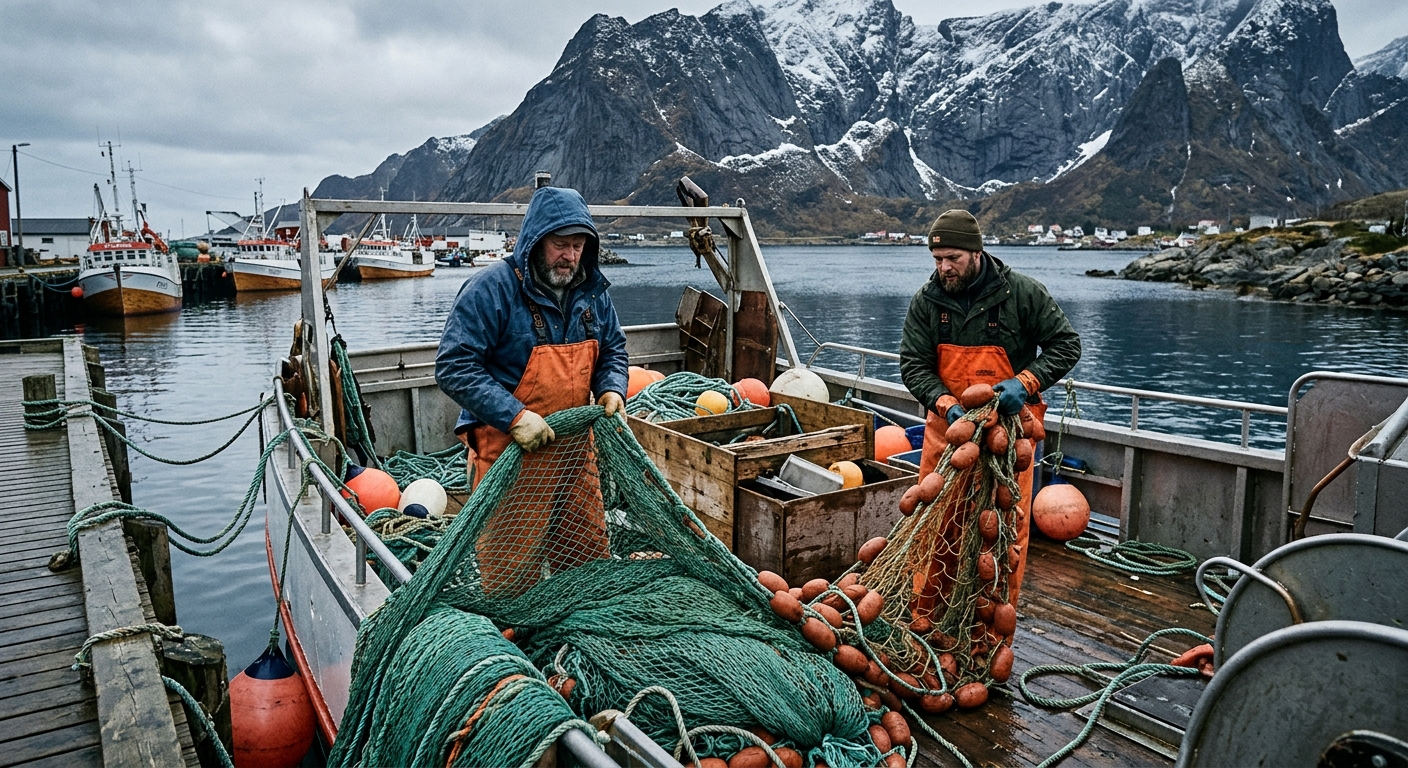
AI-generated illustration; not a photograph of the reported event.
- calendar_today November 8, 2026
Seafood Harvesting Jobs See First Uptick Since 2019
Alaska's seafood industry experienced a notable turnaround last year, registering its first increase in harvesting jobs since 2019. According to a recent report by the Alaska Department of Labor and Workforce Development, the rise marks the largest growth in seafood harvesting employment in more than a decade. Permit holders and boat crews in the industry averaged over 200 more jobs per month compared to the previous year, a 4% increase over 2024 numbers.
Pandemic’s Lingering Impact on the Fishing Industry
The recent gains follow a challenging five-year period in which seafood harvesting jobs fell to a historic low in 2024. Economist Joshua Warren, author of the new report for Alaska Economic Trends, attributed much of the decline to the COVID-19 pandemic. "Other industries saw some level of return once COVID measures stopped, but those trends just seemed to continue for seafood harvesting," Warren explained.
Closures and Reopenings Shape Industry Trends
The industry’s job losses were exacerbated by the closure of key fisheries, such as red king crab and snow crab fisheries in the Bering Sea, along with cuts in catch limits for others. However, Warren noted that there were no new fishery closures last year and that a strong salmon harvest helped stabilize employment. "We had a good salmon year, so there wasn’t a negative pressure that would cause things to continue to decrease," he said. Salmon harvesting remains a pivotal source of jobs, accounting for more than half of all seafood harvester positions in Alaska.
Groundfish and Regional Differences in Job Growth
In addition to the rebound in salmon harvesters, employment also increased in groundfish fisheries such as pollock. Still, this growth was not universal throughout Alaska. The Aleutians and Pribilof Islands region, the state’s primary hub for groundfish operations, saw an overall 4% decrease in seafood harvester jobs, and groundfish harvesters there experienced a 7% reduction. In contrast, regions like Kodiak drove the overall increase in groundfish sector jobs.
Fishery Consolidation and Its Effects
Warren suggested that job losses in the Aleutians may be due to industry consolidation, where multiple fishing permits are managed on a single vessel or larger boats replace several smaller ones, reducing overall crew needs. "Multiple permits will be fished on the same boat, or you can have one bigger boat than two medium boats," Warren explained. "Generally that reduces the number of people you need to harvest the fish."
Future Prospects for Alaska Seafood Jobs
Looking ahead, Warren noted it remains to be seen whether this upward trend in seafood harvesting jobs will continue, but another growth year is possible. As Alaska’s seafood sector stabilizes after years of decline, industry observers will watch closely to see how factors such as salmon returns, regulatory decisions, and consolidation affect the job market going forward.
Related coverage
Source: ktoo.org.


