
- calendar_today October 10, 2026
Federal Funding Targets Geothermal Heating Workforce
The maintenance of geothermal heating systems at Juneau International Airport has faced challenges due to aging heat pumps and sediment buildup. Now, a new $150,000 federal grant is set to boost the training of Alaskans for working on such systems, supporting the local shift toward renewable energy and improved energy efficiency.
Cold Climate Housing Research Center Leads Training Effort
On October 2, the Cold Climate Housing Research Center (CCHRC) announced it has secured the second phase of funding through the U.S. Department of Energy’s GHP PATHs (Partnerships to Accelerate Training and Hiring for Geothermal Heat Pumps) program. In partnership with the Renewable Energy Alaska Project, CCHRC aims to create a specialized training curriculum and host a pilot course to prepare workers for careers in geothermal heating system installation and maintenance.
Ground-Source Systems: Technology and Sites in Juneau
Ground-source heat pumps operate by circulating fluid through underground piping to absorb heat from the earth. An electrically powered heat pump concentrates this energy and distributes it inside buildings. The system can also provide cooling during warmer months by reversing the process. Unlike air-source heat pumps, which are common in Juneau homes, ground-source systems require significant underground infrastructure, including drilling and specialized mechanical work.
Juneau is home to several ground-source heating installations. The airport’s notable system began construction in 2009, with 108 wells drilled to a depth of about 360 feet. These wells collect heat for the terminal, helping to replace conventional heating oil with electricity to lower operational costs. The Mendenhall Valley Public Library and the Dimond Park swimming pool, as well as Auke Bay School, also use geothermal systems to heat and cool their facilities. Each location highlights the adaptability of ground-source systems across different building sizes and needs.
Operational Challenges and Maintenance Needs
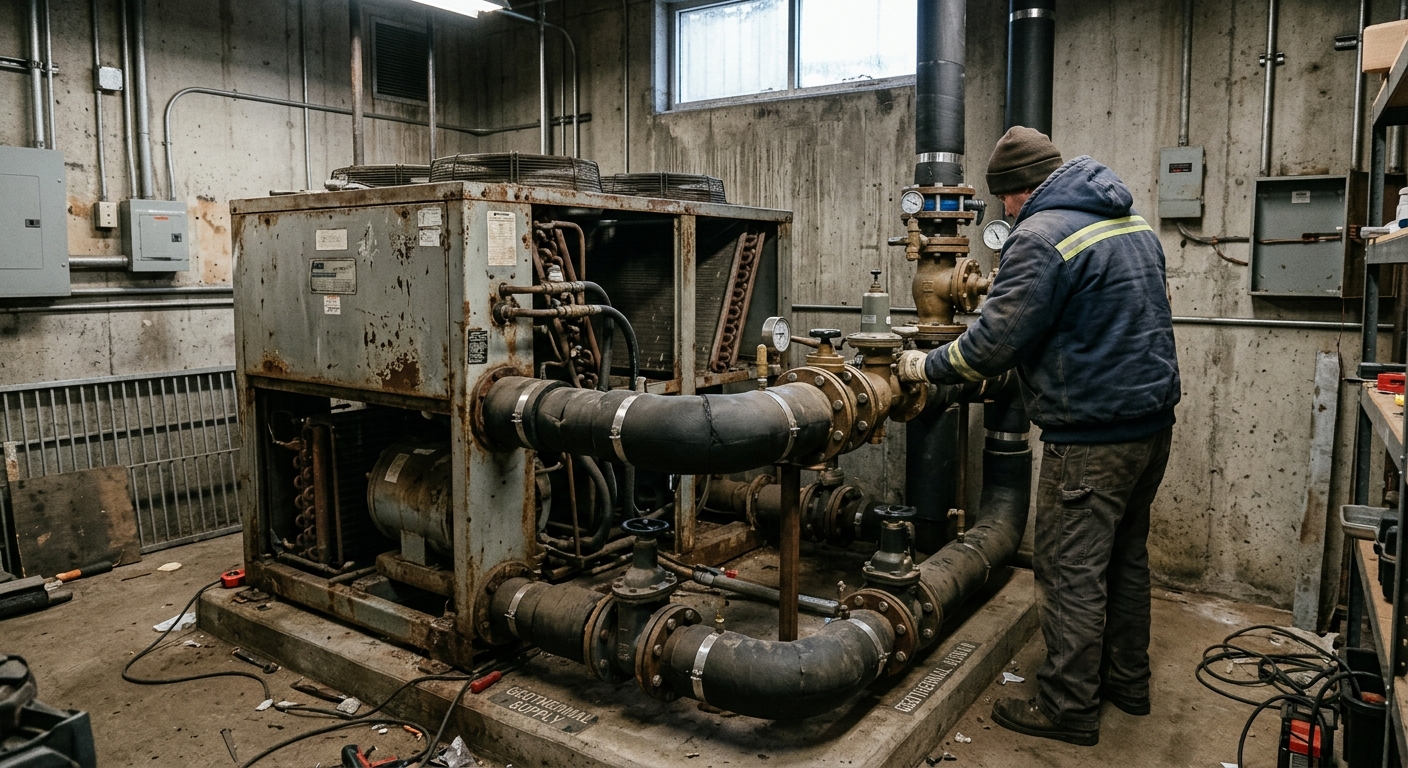
The Juneau International Airport’s geothermal system, though innovative, has required ongoing maintenance. Of approximately 30 heat pumps installed in 2009, many are nearing or past their expected service life. In 2025, airport staff reported sediment building up in the system’s fluid, even after installing filters and equipment to combat contaminants. Maintenance teams have had to clean strainers and flush heat pump coils, while engineers search for the sediment’s source. The need for specialized heat pump training and geothermal maintenance is clear, especially as other local facilities use similar technologies.
Training Program Details and Workforce Development
The new program will prepare technicians to manage the unique requirements of heating system installation and maintenance across Alaska’s diverse climates. Paul Rasmussen, executive director of CCHRC, emphasized the importance of trained local professionals for designing, installing, and maintaining these systems, which could help communities lessen their dependence on heating oil.
A distinctive aspect of the program is its plan to repurpose retired drilling equipment from Alaska’s North Slope oil industry for geothermal projects. This approach leverages existing machinery and the experience of workers from oil and gas operations, potentially simplifying the shift to renewable energy careers.
Alaska’s project, “Heating Alaska from Below: A GHP Training Program,” was among eight awarded $150,000 in the Department of Energy’s second GHP PATHs competition phase. The funds will support the development of an Alaska-specific curriculum in collaboration with industry and educators.
Future Prospects and Considerations
Although residential geothermal installations in Juneau are less common than air-source systems, industry organizations such as Alaska Heat Smart maintain lists of qualified contractors. However, details on contractors’ experience with geothermal ground loops remain limited.
The Juneau Community Development Department advises that heating systems must be sized appropriately for local weather, with secondary heat sources needed in some cases to meet building codes. Installation costs for ground-source systems remain higher due to drilling and piping requirements, making proper design and servicing crucial to realizing energy and cost benefits.
The federal grant will now finance the creation of a state-specific heat pump training program. While it is uncertain whether this training will be offered directly in Juneau, the community already provides key case studies for future trainees, thanks to its established geothermal facilities.
Source: juneauempire.com.


