
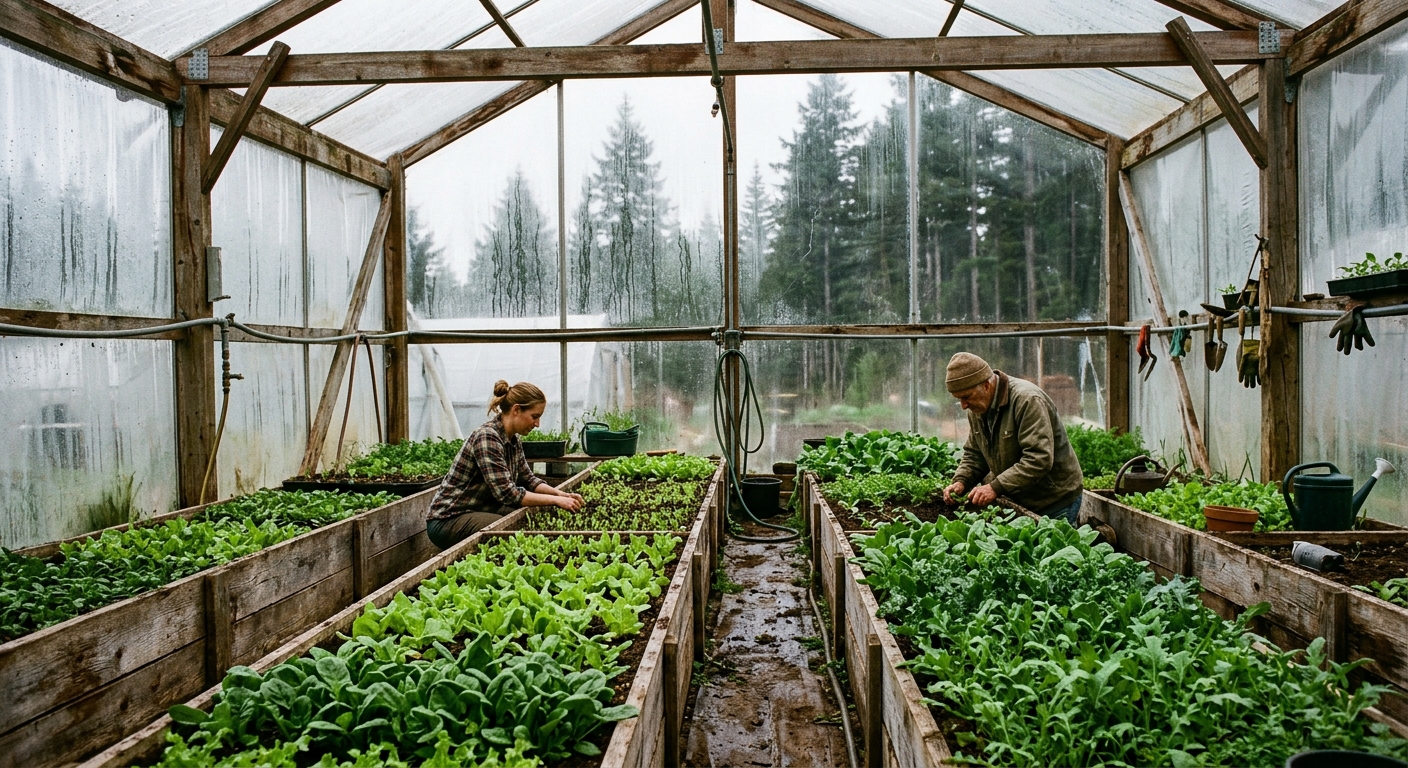
AI-generated illustration; not a photograph of the reported event.
- calendar_today July 5, 2026
Alaska communities are increasingly turning to local food systems to address challenges in food access and supply, with initiatives across the region reinforcing food security, cultural heritage, and economic opportunity.
Building Local Food Systems in Southeast Alaska
For generations, towns in Alaska have relied on rich lands and waters for nourishment. However, shifting supply chains and unpredictable access to fresh produce have prompted a regional move toward community gardening, greenhouse farming, and other place-based food initiatives. The Sustainable Southeast Partnership’s Mobile Greenhouse, ‘Moby,’ invigorated efforts in communities such as Yakutat, Sitka, and Hoonah, catalyzing collaboration around sustainable agriculture and self-reliance.
Yakutat: Tribal Roots and Modern Greenhouses
In Yakutat, the Tlingit Tribe’s expanding market and community gardens have become a cornerstone of food security for Alaska Native communities. The gardens now include greenhouses and hoop houses designed to extend growing seasons, focusing on organic principles and holistic food education. By rebuilding food self-sufficiency and passing on traditional knowledge, these projects reinforce the community’s connection to land while improving local access to fresh produce.
Education and Youth Engagement in Sitka
At Pacific High School in Sitka, gardening is about more than just cultivation—it’s a living classroom. Students participate directly in growing food, learning about sustainable agriculture and integrating cultural teachings. This immersive approach emphasizes food education and helps supply healthy meals in school cafeterias, supporting both nutritional needs and the skillset required for food sovereignty.
Year-Round Production and Markets in Hoonah
Hoonah has set a regional example with its large, heated greenhouse offering year-round production. This infrastructure supports both a community workforce and local farmers markets, driving economic benefits while reducing dependence on imported foods. These efforts help diversify food offerings, underscore the importance of community supported agriculture, and bolster overall food security in this remote locale.
Collaboration and Leadership
A key factor in the effectiveness of these local food systems is strong collaboration among residents, tribal organizations, and regional partners. Shared leadership has allowed each community to adapt to local needs and resources, whether through direct marketing initiatives, innovative greenhouse farming, or the revitalization of community gardens.
Expanding Food Sovereignty and Sustainable Practices
Ongoing projects in these Southeast Alaska communities aim to further scale up sustainable agriculture practices and increase educational outreach. Continued support for greenhouses, gardening programs, and local food education is seen as vital to fortifying food sovereignty for Alaska Native communities and all regional residents. These approaches not only offer fresh produce but preserve cultural traditions tied to the land.
Challenges and Future Directions
Despite significant progress, challenges remain, including access to funding and energy for year-round operations. Addressing these hurdles is a priority to expand the impact of community supported agriculture and maintain momentum toward efficient and sustainable food systems. As these initiatives evolve, the emphasis remains on creating opportunities for jobs, education, and resilient food infrastructure, ensuring that communities are prepared to meet both present needs and future uncertainties.
Strengthening Alaska’s Resilience
Through the collective efforts of local organizations, educators, and residents, Alaska is advancing its vision for robust local food systems. By empowering people with the infrastructure and knowledge to grow, prepare, and share healthy foods, these communities are enhancing food security, ensuring food sovereignty, and building a more sustainable future for every Alaskan.


