
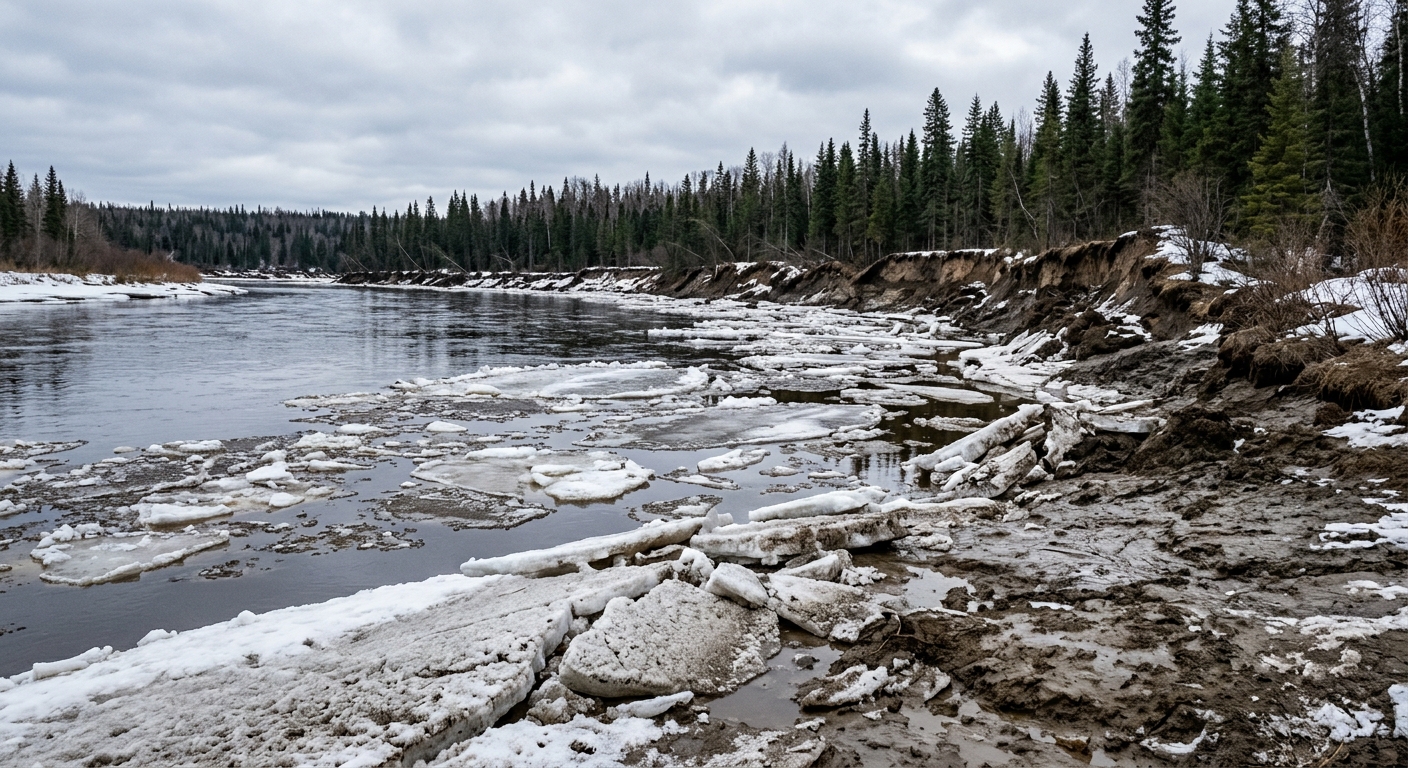
AI-generated illustration; not a photograph of the reported event.
- calendar_today June 5, 2026
Alaska — The Kuskokwim River, a vital lifeline in Southwest Alaska, is undergoing dramatic changes as climate change accelerates environmental shifts, threatening local communities and their way of life.
Changing Seasons Bring Unprecedented Challenges
In recent years, residents along the Kuskokwim River have witnessed firsthand the impact of a warming climate. Longer and less predictable ice breakup periods disrupt travel and isolate villages for weeks at a time, a stark change from the days-long transitions of previous decades. These disruptions directly affect transportation and safety for the region’s communities, many of which rely on the river for access, food, and supplies.
River Monitoring Efforts Expand
To better understand these environmental changes, a team of researchers led by Steve Dykstra from the University of Alaska Fairbanks has partnered with the Native Village of Napaimute. Together, they are installing a network of sensors along the Kuskokwim and Aniak rivers to collect critical data. The goal is to monitor everything from water levels and temperature to the timing of ice breakup and the strength of storm surges, providing actionable information for those living in Southwest Alaska.
Storm Surges and Flooding Impacts
The increased frequency and strength of storms have led to more severe flooding impacts in the region. Riverbank erosion continues to accelerate, creating significant risk for homes, infrastructure, and even drinking water supplies. As freshwater is compromised by rising saltwater intrusion, several villages confront difficult choices about their future. Kipnuk, for example, has already taken the step of voting to relocate its residents due to repeated storm damage.
Ice Roads Under Strain
Ice roads, once a reliable winter transportation method along the Kuskokwim River, are now increasingly difficult to maintain. Warmer weather and erratic temperatures have made ice road conditions less predictable and more hazardous. Many communities, including those near the Aniak River, rely on these routes for moving goods and connecting with neighboring villages. Unpredictable ice breakup no longer supports the security once associated with winter travel.
The Erosion of Shoreline and Heritage
Along with economic and practical challenges, ongoing river erosion and shoreline loss threaten not only the landscape but the cultural heritage of the region. The Kuskokwim River has played a central role for Alaska Native communities for generations. As rising waters and more powerful storms carve away at the banks, residents must contend with the loss of traditional lands and sacred sites.
Collaborative Adaptation and Looking Forward
Through coordinated river monitoring and research, Alaska’s communities and institutions are striving to adapt to the pressing realities of climate change. The collaboration between scientific researchers and the native village has become essential in tracking and responding to the environmental changes along the Kuskokwim River. The data from these efforts will inform critical decisions on community safety, future relocation, and resource protection as conditions continue to evolve in Southwest Alaska. Residents and local leaders hope that proactive adaptation, supported by solid science, will help safeguard their home and way of life for future generations.


